

What Is an ROV Tether?
An ROV tether is a specialized underwater cable that connects a remotely operated vehicle (ROV) to its control or support system. It provides power, communication, data transmission and a mechanical connection during underwater operation. An ROV tether cable may combine power conductors, signal or data pairs, fiber optics, strength members and protective layers.
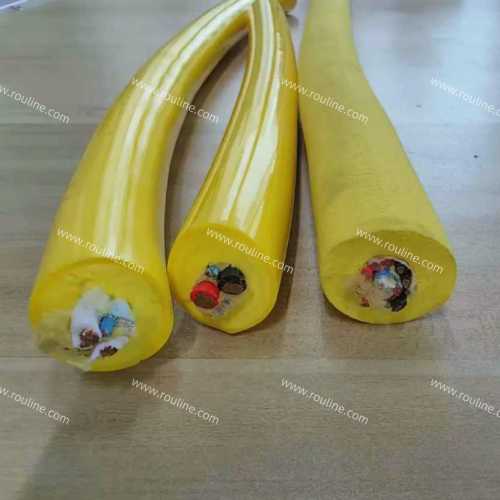
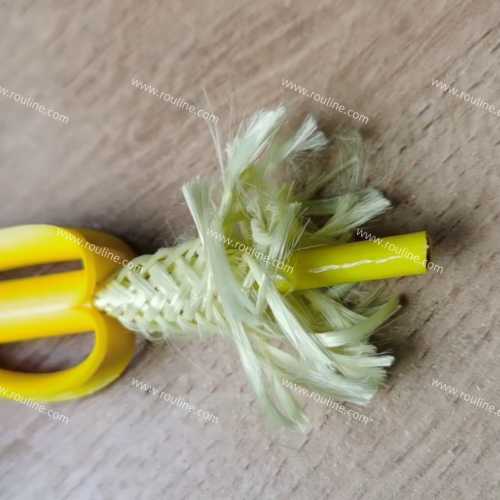
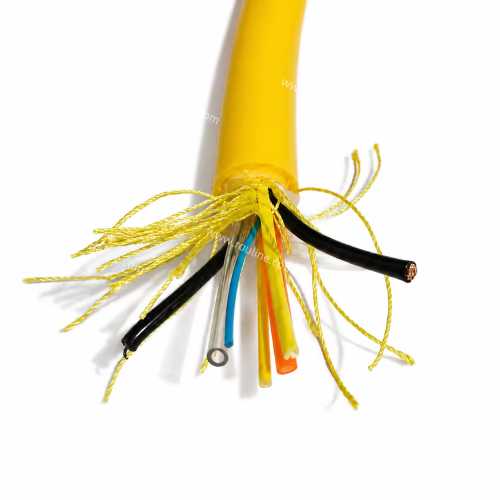
Buoyancy ROV Tether Cables by RouLine
What Is an ROV Tether Used For?
An ROV tether typically performs three functions:
Power Transmission
Power conductors supply electrical power to the ROV. Conductor size and configuration depend on voltage, current, power demand, cable length and voltage drop.
Communication and Data Transmission
The tether can carry control signals, video, Ethernet, sensor data and other communications. Fiber optic elements can be included when high-bandwidth transmission is required.
Mechanical Connection
The tether also acts as a mechanical link. During operation it can experience tension, bending and hydrodynamic drag, all of which can influence ROV motion and handling.
How Is an ROV Tether Cable Constructed?
An ROV tether cable is generally a multilayer structure designed around electrical, mechanical, buoyancy and environmental requirements.
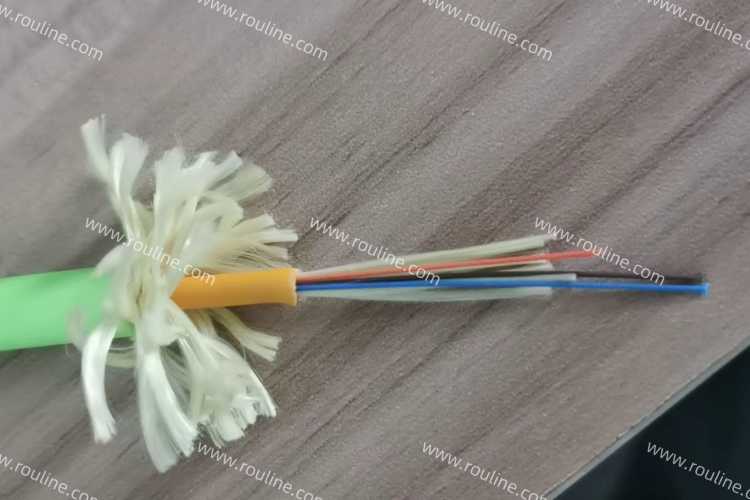
Conductors and Insulation
Conductor size and insulation materials are selected according to voltage, current, flexibility and underwater operating requirements.

Shielding and Fiber Optics
Fiber optics elements are often integrated when real-time video, high-speed data or long-distance signal transmission is required.
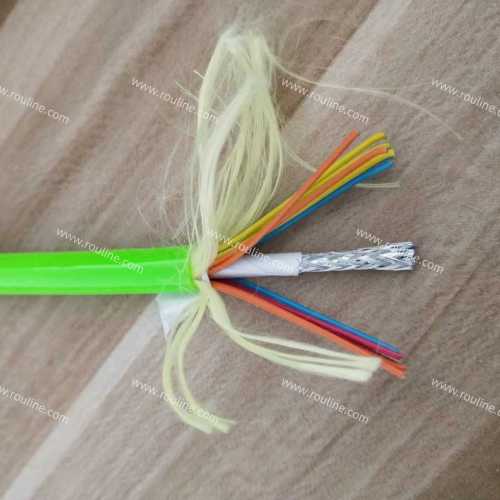
Strength Members
Aramid fibers such as Kevlar can be incorporated to improve Tensile Strength without adding excessive weight or diameter. The strength member configuration is determined by the expected working load, dynamic movement, bending cycles and the way the tether is handled during operation.
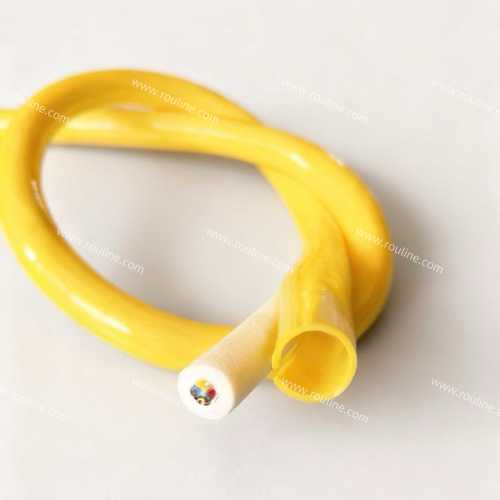
Buoyancy and Outer Jacket
Buoyancy is an important part of ROV tether construction. Depending on the ROV and deployment method, the cable may be designed to be neutral, positively buoyant or negatively buoyant. Neutral-buoyancy construction can help reduce the mechanical load and drag imposed on a free-swimming ROV.
What Are the Key Design Requirements for an ROV Tether?
ROV tether design must balance several properties:
↗Buoyancy and Weight: selected according to the ROV configuration and operating environment.
↗Tensile Strength: sufficient for working and dynamic loads.
↗Flexibility: able to withstand repeated bending and cable handling.
↗Hydrodynamic Performance: diameter, length, buoyancy and position affect drag.
↗Environmental Resistance: suitable for pressure, seawater, temperature, abrasion and chemicals.
How Does an ROV Tether Affect ROV Performance?
An ROV tether is part of the overall underwater vehicle system, not simply an electrical cable. Cable length, diameter, stiffness, tension and drag can affect maneuverability, speed and power consumption. Research has shown that increased tether length can reduce ROV mobility and increase power demand under certain operating conditions.
What Is the Difference Between an ROV Tether and an ROV Umbilical?
In a typical work-class ROV architecture, the system may be arranged as:
Surface Vessel → Umbilical → Tether Management System (TMS) → Tether → ROV
The umbilical generally connects the surface vessel to the TMS, while the tether connects the TMS to the ROV. This distinction is common in larger systems but is not universal; smaller or differently configured ROVs may use a direct tether or umbilical connection.
Comparison Aspect | ROV Tether | ROV Umbilical |
Connection Point | Connects the TMS to the ROV itself | Connects the surface vessel to the ROV or TMS |
Buoyancy Design | Usually neutrally buoyant to reduce its impact on ROV maneuverability | Usually negatively buoyant, relying on strength to support its own weight |
Jacket Material | Uses synthetic fibers (e.g., Kevlar, Vectran) to maintain neutral buoyancy | Typically uses a steel jacket or steel armoring |
Key Considerations | Flexibility and low drag to avoid affecting ROV control | Tensile strength and durability to withstand the suspended weight over long distances |
Where Are ROV Tethers Used?
ROV tether cables are used for
underwater inspection and survey,
offshore oil and gas operations,
marine research, subsea intervention,
search and recovery.
The tether enables operators to control the vehicle while receiving live video, sensor information and other data.
What Should You Consider When Choosing an ROV Tether Cable?
Selection should start with the complete ROV system requirements rather than cable diameter alone. Consider:
↗Electrical: voltage, current, power, conductor size and voltage drop.
↗Data: Ethernet, twisted pairs, coaxial signals or fiber optics.
↗Mechanical: working tension, breaking strength, bend radius and flex life.
↗Buoyancy: neutral, positive or negative according to the application.
↗Environment: depth, temperature, seawater, abrasion, chemicals and service life.
FAQs About ROV Tethers
What is an ROV tether used for?
It connects an ROV to its control or support system and can transmit power, communication and data while providing a mechanical link.
Are ROV tethers always neutrally buoyant?
No. Buoyancy can be neutral, positive or negative depending on the ROV system and operating requirements.
Can an ROV tether carry both power and fiber optics?
Yes. A single ROV tether cable can combine electrical conductors and optical fibers.
How deep can an ROV tether operate?
There is no universal maximum depth. Operating depth depends on cable construction, pressure resistance, mechanical loading, buoyancy, materials, connectors and system design.
Conclusion
An ROV tether is a specialized underwater cable that combines electrical, communication and mechanical functions. Effective ROV tether cable design requires a balance of power transmission, data capacity, tensile strength, flexibility, buoyancy, hydrodynamic performance and environmental resistance. The right cable should therefore be selected according to the requirements of the complete ROV system.

Post time:2026-09-11
