

Integrating Fiber Optics
into Custom Subsea and ROV Cables
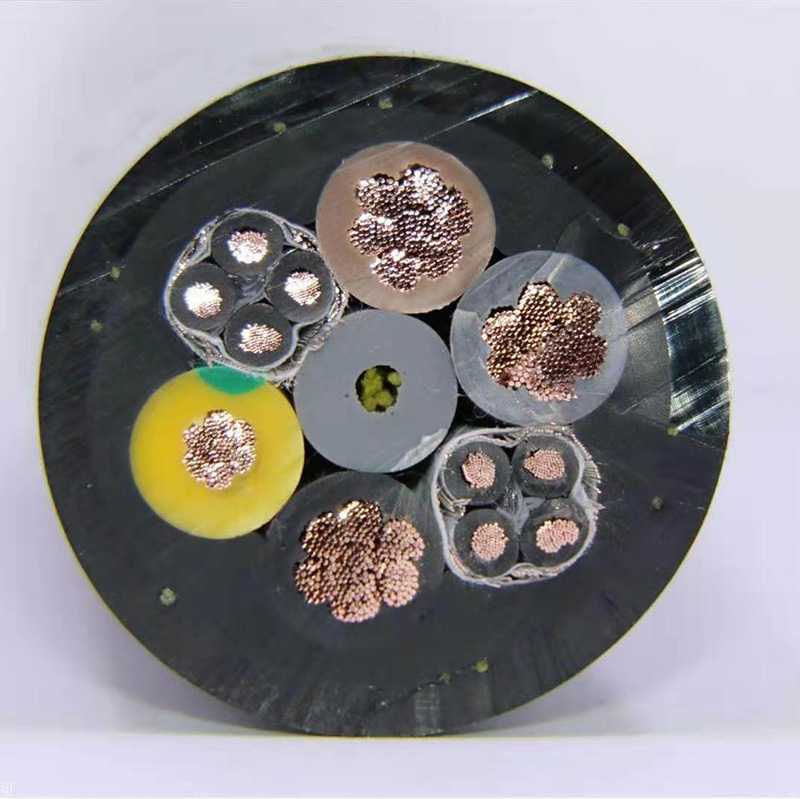
ROV fiber optic cable provides a high-bandwidth, low-latency communication link between the underwater vehicle and the surface support vessel, enabling real-time control and high‑definition video transmission for deep‑sea operations.
We provide customized cable solutions with controlled manufacturing processes, advanced materials, and application-specific designs.

Custom Fiber Optic ROV Cable Solutions
Every underwater application has different requirements for communication, power transmission, mechanical strength, and environmental resistance. We provide customized fiber optic ROV cable designs based on specific operational conditions, ensuring the cable structure matches the requirements of each ROV system.
We provide customized fiber optic ROV cable solutions, our solutions include:
Fiber Optic ROV Tether Cable
Designed for long-distance ROV operations, integrating fiber optics, power conductors, signal wires, and strength members for reliable data transmission and control.
Hybrid Susbea Cable
We integrate optical fibers with power and control conductors in a Hybrid Subsea Cable, combining multiple functions into one customized subsea cable.
Electro-Optical Subsea Cable
We engineer Electro-Optical Subsea Cables to combine reliable power transmission with high-bandwidth optical communication in demanding subsea environments.
Lightweight Neutral Buoyancy ROV Cable
Customized for reduced drag and improved maneuverability, with buoyancy options for seawater or freshwater environments.
Engineering Challenges in Fiber Optic ROV Cable Manufacturing
Integrating fiber optics into ROV cables requires more than adding optical elements into a cable structure. The manufacturing process must carefully balance optical performance, mechanical strength, flexibility, and environmental resistance. Our engineering approach focuses on protecting fiber performance throughout cable production and long-term subsea operation.
1. Fiber Protection and Stress Management
Optical fibers are highly sensitive to excessive tension, bending, and mechanical stress. During ROV cable manufacturing, the internal structure must be carefully designed to protect fiber integrity while maintaining cable flexibility.
Our manufacturing approach includes:
Optimized fiber routing and internal cable structure design
Integration of Kevlar or strength members for load management
Controlled stranding processes to reduce fiber stress
Customized reinforcement designs for dynamic bending applications
2. Temperature and Process Control
Fiber optic ROV cables require precise control of manufacturing parameters to maintain optical performance and structural reliability. During extrusion, assembly, and multi-layer cable processing, excessive temperature variation or process deviation may affect fiber performance and cable consistency.
Our manufacturing process focuses on:
Precise extrusion temperature control to protect fiber and insulation materials
Stable production parameters for consistent cable diameter and layer thickness
Controlled tension during fiber assembly and cable stranding
Optimized processing conditions for different jacket and insulation materials
3. Material Selection and Environmental Compatibility
Subsea ROV cables operate in challenging environments involving seawater exposure, pressure changes, abrasion, and temperature variations. Selecting suitable materials is essential for long-term reliability.
Based on application requirements, we select and combine materials such as:
PUR jackets for seawater resistance and mechanical durability
TPU materials for flexibility and dynamic applications
LSZH materials for specific safety requirements
Specialized materials for low-temperature or harsh environments
→ Explore Why Jacket Material Selection Matters in Subsea Cable Design?
4. Precision Manufacturing Processes and Equipment
Fiber optic ROV cables require precise manufacturing control to ensure consistent electrical, optical, and mechanical performance.
Our manufacturing capabilities include:
Controlled optical fiber assembly and handling
Multi-layer extrusion with accurate thickness control
Shielding, reinforcement, and armouring processes
Customized cable structures based on project specifications
5. Comprehensive Testing and Quality Control
Reliable fiber optic ROV cables require comprehensive inspection throughout the manufacturing process. We perform multiple tests to verify optical performance, electrical characteristics, and mechanical reliability.
Testing includes:
Optical attenuation and fiber continuity testing
OTDR testing for fiber performance verification
Conductor resistance and insulation testing
Tensile strength and mechanical performance testing
Water resistance and environmental durability testing
Custom Fiber Optic ROV Cable Design Capability
We provide customized fiber optic ROV cable solutions based on different underwater application requirements. Our engineering team can optimize cable structures, materials, and configurations to meet specific requirements for data transmission, power supply, mechanical strength, and operating environments.
Customization options include:
Fiber count and optical configuration
Power conductor and signal integration
Tensile strength and reinforcement structure
Buoyancy and cable flexibility adjustment
Cable diameter, length, and jacket materials
From prototype development to customized production, we support customers with application-specific fiber optic ROV cable designs.
Post time:2026-07-29
