

ROV Tether Solutions for Underwater ROVs
ROV tether is a lightweight, flexible cable used to connect an underwater ROV to its control or surface system, typically transmitting power, control signals, video, data, or other communication signals. Its construction can be customized according to ROV size, operating depth, tensile load, bending requirements, and transmission needs.
Designing a high-performance dynamic ROV tether requires balancing multiple engineering factors, including functional integration, tensile strength, flexibility, buoyancy, hydrodynamic performance and long-term environmental reliability.
ROV Tether Cable Structure
Integrating Power, Data and Mechanical Functions
A dynamic ROV tether is not simply a power cable or communication cable. It is a highly integrated system combining multiple functional elements within a limited diameter. The internal structure may include:
↗Power Conductors
↗Fiber optic elements
↗Signal wires
↗Reinforcement layers
Most ROV tether use multi-layer concentric structures. Each layer must maintain proper alignment and balance to ensure smooth operation through winch systems while reducing stress concentration during bending. A compact and lightweight cable design can simplify deck handling, reduce storage requirements and improve subsea deployment efficiency.
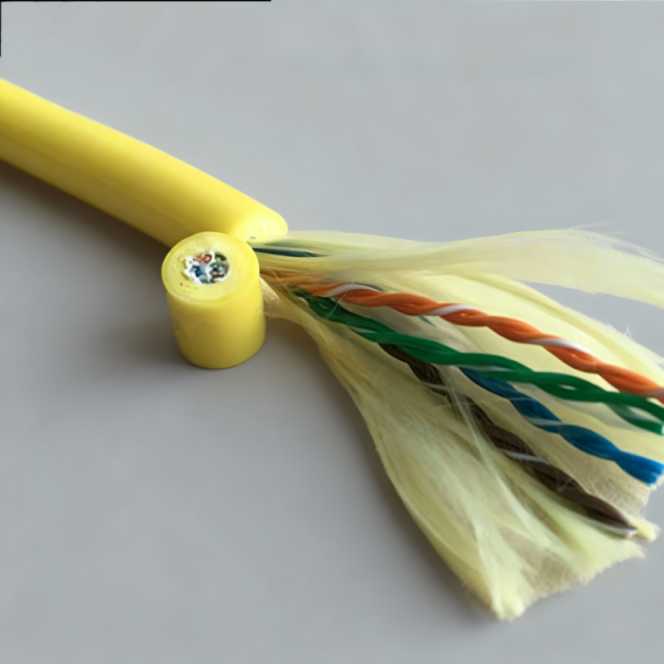
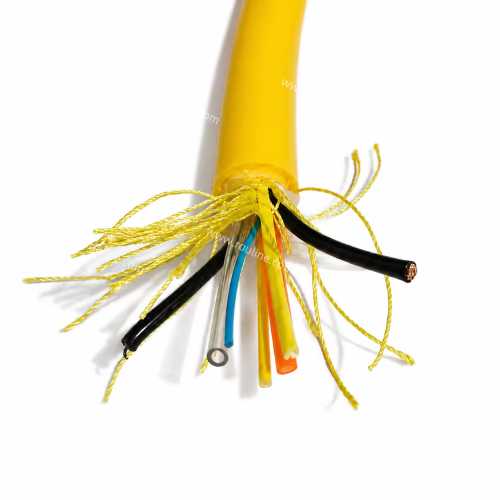
Those are typical rov tehters with Neutral Buoyancy, Reinforcement Layers and Air Hose.
Key Features of ROV Tether
Balancing Tensile Strength, Flexibility and Fatigue Resistance
The biggest challenge in dynamic ROV tether cable design is not achieving maximum strength, but finding the optimal balance between strength and flexibility. During deepwater operations, the cable must withstand:
Its own suspended weight
Deployment and recovery tension
Continuous bending cycles
Dynamic loads caused by vessel movement and ocean currents
Optimizing Buoyancy and Hydrodynamic Performance
A dynamic ROV tether cable operates together with the ROV as a complete underwater system. Cable weight, diameter and buoyancy directly influence vehicle maneuverability. Cable design must consider:
Ocean current conditions
ROV working depth
Cable length
Vehicle movement pattern
Designing for Reliable Deployment and Handling
A high-performance ROV tether cable must also be compatible with practical deployment systems. During operation, winch systems and cable management equipment must control tension and maintain the required minimum bending radius to prevent mechanical damage. Important design considerations include:
Flexibility during repeated winding
Resistance to crushing and abrasion
Stable performance during deployment and recovery
Ensuring Long-Term Reliability in Harsh Subsea Environments
Reliable dynamic ROV tether cables require carefully selected materials and construction methods to maintain performance throughout extended missions. Subsea environments create significant challenges for cable reliability, including:
Seawater corrosion
Low temperatures
High pressure
Long-term mechanical wear
Biofouling exposure
Custom ROV Tether Cable Solutions
Every subsea operation has different requirements. Cable length, operating depth, tensile load, buoyancy and transmission requirements all influence the final design. With customized conductor configurations, reinforcement structures, fiber integration and jacket materials, we develop dynamic ROV tether cables for demanding subsea applications.
Requirement | Customization |
ROV size | Cable diameter and weight |
Operating depth | Jacket and pressure-resistant construction |
Tensile load | Aramid/Kevlar strength member |
Power | Conductor size |
Data transmission | Twisted pairs / coax / fiber optics |
Buoyancy | Neutral or positive buoyancy design |
Deployment | Tether construction and jacket selection |
Contact Our Engineering Team to discuss your ROV tether cable requirements and develop a solution optimized for your specific operation.

Post time:2026-08-04
