

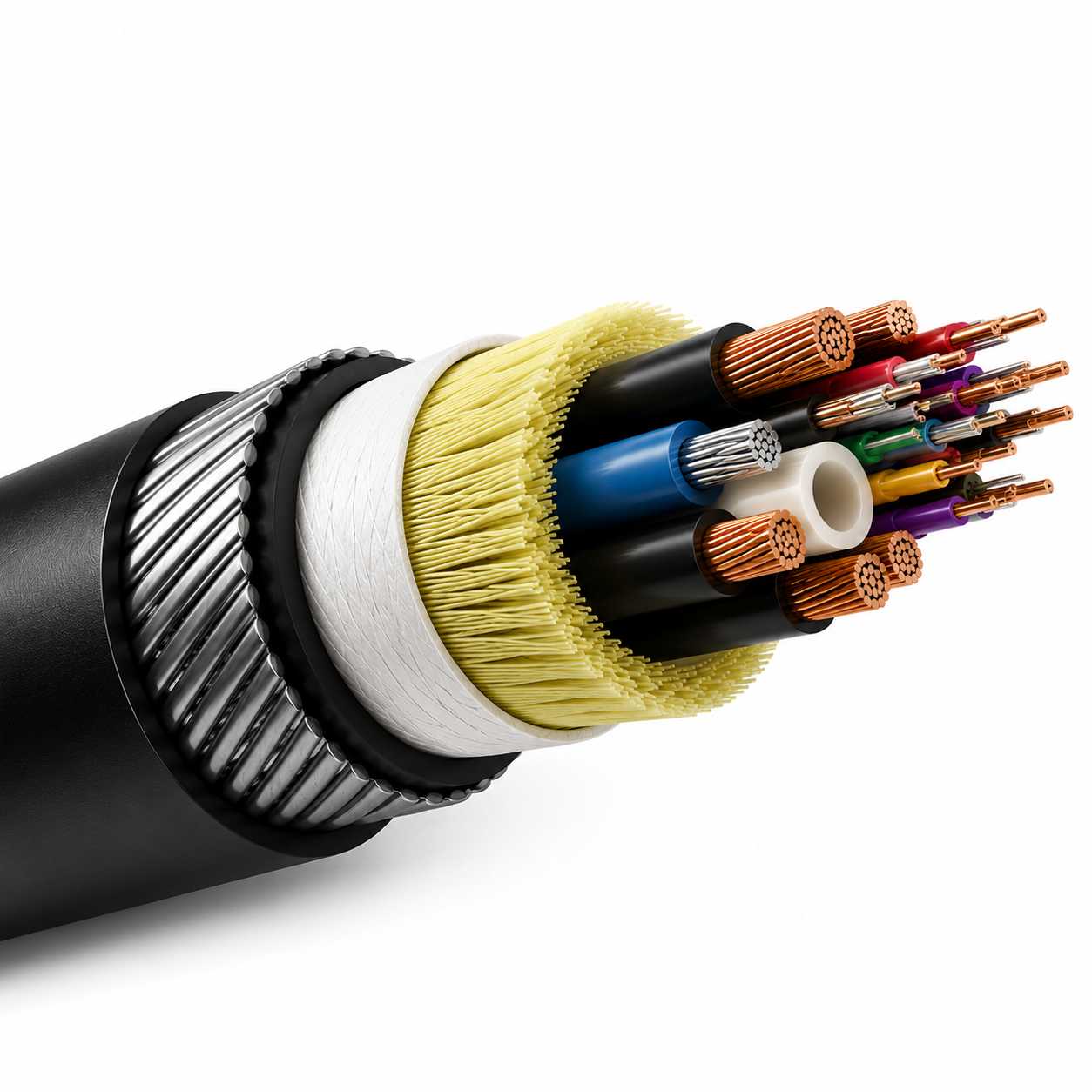
3 Critical Subsea Cable Selection Mistakes
That Can Lead to Early Failure
Introduction
Selecting the right subsea cable is a critical decision for marine, offshore and underwater applications. Unlike standard industrial cables, subsea cables operate in environments where mechanical stress, seawater exposure, pressure changes and continuous movement can significantly affect long-term performance.
Many cable failures are not caused by manufacturing defects, but by incorrect decisions made during the subsea cable selection process. A cable may meet basic electrical requirements while still failing to perform under actual operating conditions.
Common selection mistakes include choosing unsuitable materials, underestimating mechanical loads and using a cable structure that does not match the application environment. Understanding these factors helps engineers develop a more reliable subsea cable design and reduce unexpected downtime, maintenance costs and replacement risks.
Need a subsea cable solution designed for your specific operating conditions? Our engineering team can help evaluate cable structure, materials and performance requirements.

Mistake 1 — Ignoring Material Selection for Long-Term Subsea Exposure
Why Subsea Cable Materials Directly Affect Service Life
The materials used in a subsea cable determine how well it performs over years of underwater operation. Selecting the wrong jacket or insulation material can gradually reduce cable performance, even if the cable initially meets all electrical specifications.
For example, a cable designed for repeated movement may require a flexible and abrasion-resistant jacket material, while a fixed underwater installation may prioritize water resistance and long-term environmental stability.
Key Material Factors Engineers Should Evaluate
During subsea cable selection, engineers should consider:
Jacket Material
The outer jacket provides the first layer of protection against the underwater environment. Common options include:
PUR for flexibility and abrasion resistance
PE for excellent water resistance
FEP or PTFE for demanding chemical and temperature conditions
Insulation Performance
Insulation materials must maintain electrical reliability throughout the cable’s service life, especially in applications involving high voltage or sensitive signal transmission.
Environmental Compatibility
Material selection should consider:
operating temperature range
exposure time
mechanical movement
chemical environment
A suitable subsea cable material choice improves durability and reduces the risk of premature failure. → Custom Engineered Subsea Cables
Mistake 2 — Underestimating Mechanical Loads and Dynamic Movement
Static Load vs. Dynamic Load in Subsea Cable Applications
Many engineers focus primarily on electrical performance during cable selection, but mechanical stress is one of the most common causes of subsea cable failure. A subsea cable may experience:
continuous tension
bending cycles
pulling forces
twisting
repeated deployment and recovery
These conditions are especially important for dynamic applications such as ROV systems, underwater vehicles and offshore equipment. → ROV Tether Cable
A cable that performs well in a stationary installation may not survive thousands of movement cycles in a dynamic environment.
Mechanical Factors That Influence Cable Reliability
A reliable subsea cable design must consider:
Tensile Strength
For applications involving pulling or suspended loads, the cable requires suitable reinforcement structures to handle mechanical forces. → Armoured Subsea Cable
Flexibility and Bending Radius
Excessive bending can damage:
conductors
insulation layers
shielding structures
The cable structure must support repeated movement without reducing service life. → Flexible ROV Cable
Reinforcement Design
Depending on the application, reinforcement may include:
Kevlar strength members
steel wire armor
specialized mechanical protection layers
For example, an ROV tether cable requires a different structure compared with a fixed subsea monitoring cable because it must balance flexibility, weight and tensile performance.
Mistake 3 — Choosing the Wrong Cable Structure for the Operating Environment
Why Standard Cable Structures May Not Fit Every Application
A common mistake in subsea cable selection is choosing a cable based only on basic specifications such as voltage rating, conductor size or outer diameter.
However, cable structure determines how the cable performs in real operating conditions. Different applications require different structural designs.
For example:
ROV applications may require lightweight and flexible structures.
Deep-water systems may require stronger armor protection.
Monitoring systems may require optimized shielding for signal integrity.
A standard cable structure cannot always meet these different requirements.
Key Design Elements in Custom Subsea Cable Structures
A properly engineered subsea cable structure may involve customization of:
conductor arrangement
shielding layers
fiber optic integration
reinforcement components
buoyancy characteristics
jacket construction
The right structure should be developed based on the complete operating environment rather than selected from a standard product range.
How Proper Subsea Cable Design Reduces Failure Risks
Reliable subsea cable performance starts with understanding the relationship between environment, materials and mechanical requirements.
A successful selection process should evaluate:
Where will the cable operate?
How will the cable move or be installed?
What mechanical forces will it experience?
What environmental conditions will affect material performance?
By considering these factors early, engineers can avoid common design issues and develop a cable solution with better reliability and longer service life.
Selecting the Right Subsea Cable Solution for Your Application
Every subsea project has unique requirements. A reliable cable solution may require customization of materials, structure and performance characteristics.
Working with an experienced subsea cable manufacturer allows engineers to optimize cable design based on:
operating environment
mechanical requirements
electrical performance
installation conditions
A well-designed subsea cable is not simply a product choice — it is an engineered solution developed for a specific application.
Conclusion
Avoiding common subsea cable selection mistakes helps improve system reliability and reduce long-term operating costs.
Material selection, mechanical performance and cable structure are three key factors that determine whether a subsea cable can perform successfully in demanding underwater environments.
By choosing the right design approach and working with an experienced manufacturer, engineers can develop reliable cable solutions for offshore, marine and subsea applications.
Contact us to discuss your subsea cable project requirements.
Post time:2026-08-05
