

High Tensile Strength
ROV Tether Cable Design and Manufacturing
ROV tether and subsea umbilical cables are exposed to continuous mechanical loads during deployment, operation, and recovery. In deep-water environments, cable weight, towing forces, vessel movement, and underwater currents can create significant tensile stress on the cable structure.
To ensure reliable operation, high tensile strength is a critical performance requirement for custom ROV cables.
As a custom cable manufacturer, we engineer high tensile strength ROV tether cables, umbilical cables, and subsea cable solutions using optimized reinforcement structures, including Kevlar fiber, steel armor, and hybrid designs.
Our reinforcement systems are customized according to operational requirements such as working depth, tensile load, buoyancy, flexibility, and deployment conditions.
Our Solutions
We provide customized reinforcement solutions for different underwater cable applications:
ROV Tether Cable
Designed for continuous underwater connection between ROVs, TMS systems, and surface equipment, requiring high tensile strength, flexibility, and controlled weight.
Umbilical Cable
Engineered for complex subsea systems integrating power, signal, fiber optics, hydraulic tubes, or pneumatic channels while maintaining mechanical stability.
ROV Cable
Customized for observation ROVs, work-class ROVs, and specialized underwater equipment requiring reliable tensile performance and environmental protection.
Reinforcement Materials for High Tensile Strength Cable Design
The choice of reinforcement material depends on the operational requirements of the ROV system. The two most commonly used solutions are high-strength synthetic fibers and steel wire.
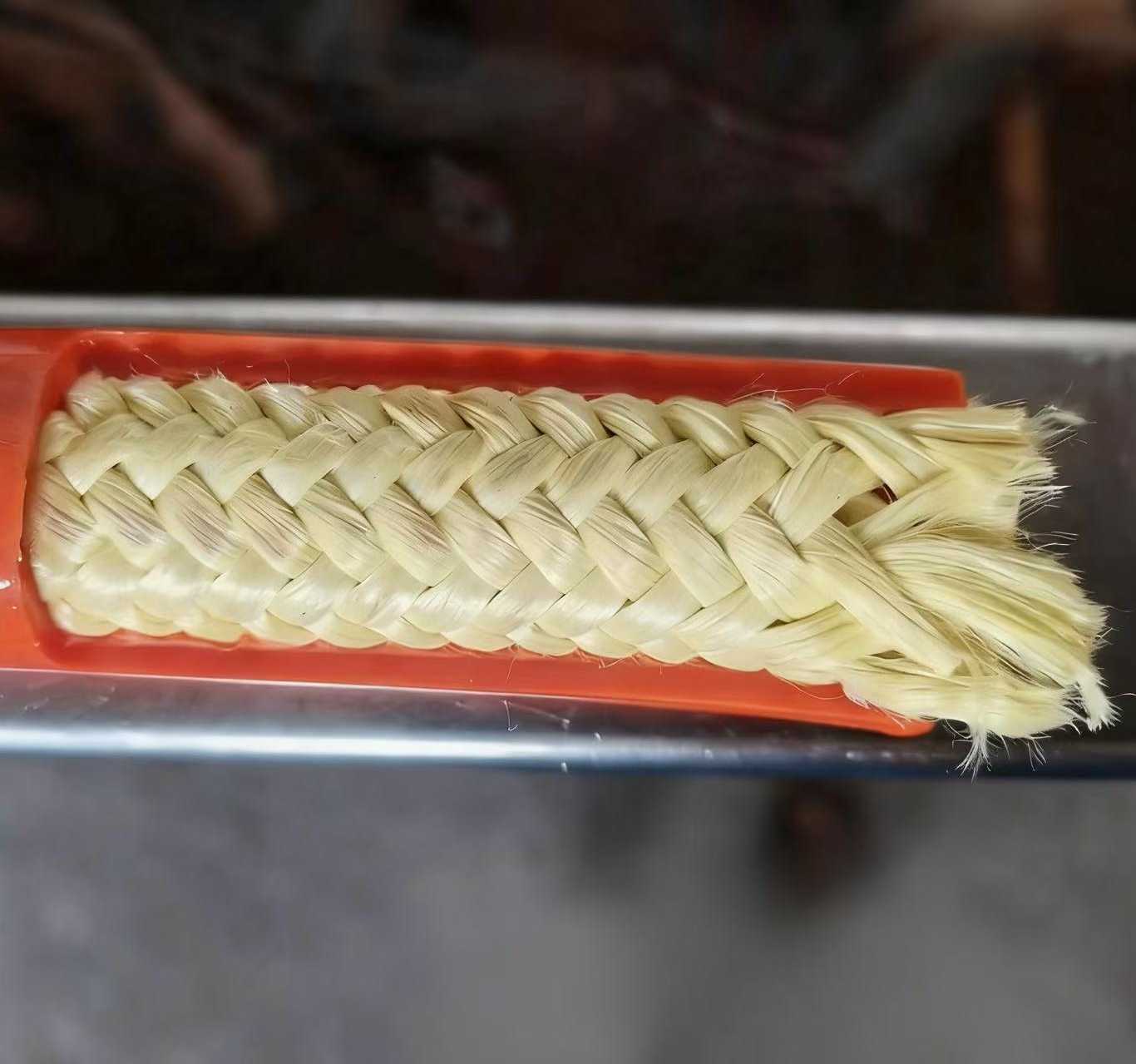
Aramid Fiber (Kevlar®) Reinforcement
Aramid fiber is one of the most widely used reinforcement materials for lightweight ROV tether cables.
Its main advantage is an excellent strength-to-weight ratio. With tensile strength of approximately 3000 N/mm² and a density of around 1450 kg/m³, aramid reinforcement provides high tensile performance while significantly reducing cable weight.
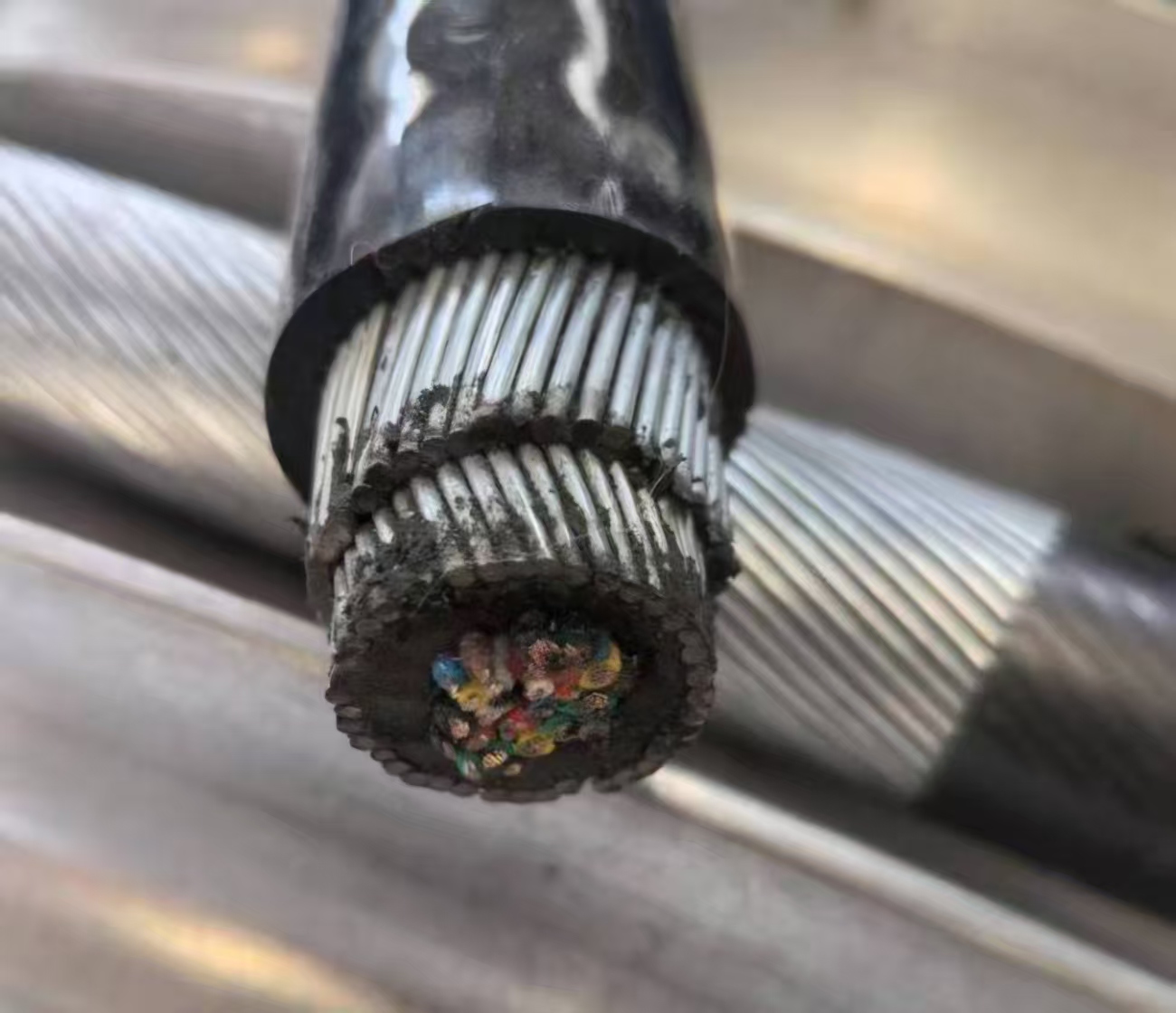
High Strength Steel Wire Reinforcement
Steel wire armor remains widely used in heavy-duty ROV cable applications where maximum mechanical protection is required.
However, steel has a much higher density (approximately 7890 kg/m³), which increases cable weight and can create additional load during deep-water operations.
Therefore, steel reinforcement is typically selected when mechanical protection and load capacity are more critical than weight reduction.
Hybrid Reinforcement Solutions
For demanding subsea applications, hybrid reinforcement combines different materials to achieve optimized performance.
Examples include:
Steel reinforcement for high load capacity and mechanical protection
Kevlar fiber reinforcement for weight reduction and flexibility
This approach allows engineers to customize cable structures according to specific requirements, such as deep-water ROV operations, subsea intervention systems, and offshore equipment.
Custom Reinforcement Structure Design
The reinforcement layer is not simply wrapped around the cable. Its structure and placement directly influence cable performance. For synthetic fiber reinforcement, several structural approaches are commonly used:
Central Strength Member
A concentrated fiber bundle is positioned at the cable center to provide the primary load-bearing function.
Interstitial Reinforcement
Reinforcement fibers are placed between internal components, maximizing available space while maintaining cable flexibility.
Outer Braided Reinforcement
A braided fiber layer is applied around the cable core to provide balanced tensile support and mechanical protection.
Anti-Torsion Design
ROV cables experience twisting forces during deployment, recovery, and vehicle movement. To reduce torsional stress, multi-layer reinforcement structures may use opposite lay directions between adjacent layers. This counter-balancing design helps prevent torque accumulation inside the cable.
Many high-performance ROV cables also use concentric lay constructions, ensuring that mechanical forces are evenly distributed throughout the cable structure.
Key Design Considerations for High Tensile ROV Tethers
High tensile strength cable design requires balancing multiple engineering requirements.
Tensile Load and Working Depth
The required tensile strength depends on:
Cable length
Operating depth
ROV weight
Deployment method
Environmental loading
Deep-water ROV tether cables typically require higher tensile performance due to increased suspended cable weight.
Weight and Buoyancy Control
For underwater applications, cable weight directly affects ROV performance.
Lightweight reinforcement materials such as Kevlar can reduce cable load and support neutral buoyancy designs, especially for long tether systems.
Flexibility and Bending Performance
ROV cables and umbilical cables must withstand repeated bending during deployment and recovery.
The reinforcement structure must provide sufficient strength without reducing flexibility or shortening bending life.
Corrosion and Water Protection
Subsea cables operate in highly corrosive marine environments.
To improve long-term reliability, reinforcement structures are combined with:
Corrosion-resistant steel wire
Water-blocking materials
Marine-grade PUR outer jackets
These designs prevent seawater penetration and protect internal components.
How to Select the Right High Tensile Strength Design?
The optimal reinforcement structure depends on the ROV system requirements.
Heavy-duty Work-Class ROVs
For deep-water and high-load operations, steel armored cables are commonly selected as the primary strength solution. However, the tether cable connecting the ROV and TMS often uses lightweight aramid reinforcement to maintain neutral buoyancy and flexibility.
Observation-Class and Lightweight ROVs
For applications requiring easy handling and high maneuverability, Kevlar-reinforced neutral buoyancy cables are commonly preferred.
A high-performance ROV cable is not defined by tensile strength alone. The reinforcement design must achieve the right balance between load capacity, weight, flexibility, buoyancy, durability, and cost.
Through customized reinforcement structures, we help engineers develop ROV cables optimized for specific subsea operating environments.
Post time:2026-07-29
