

Flat Elevator Traveling Cable
Complete Guide to Features, Options, and Applications
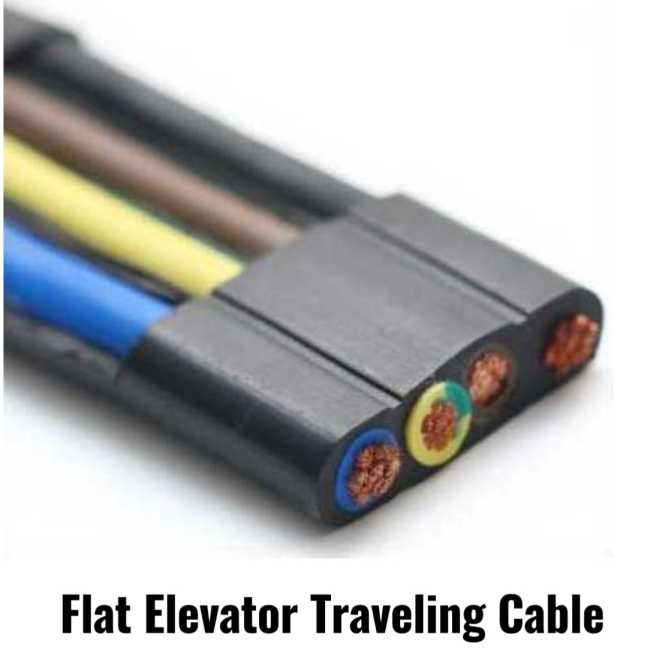
Flat elevator traveling cables are the critical transmission medium in elevator systems, carrying power, control, data, and video signals. Their reliability directly impacts operational safety and maintenance costs. Compared to round cables, flat elevator traveling cables offer clear engineering advantages including reduced hoistway space occupation, lower bending radius for frequent flexing, and better heat dissipation for extended insulation life.
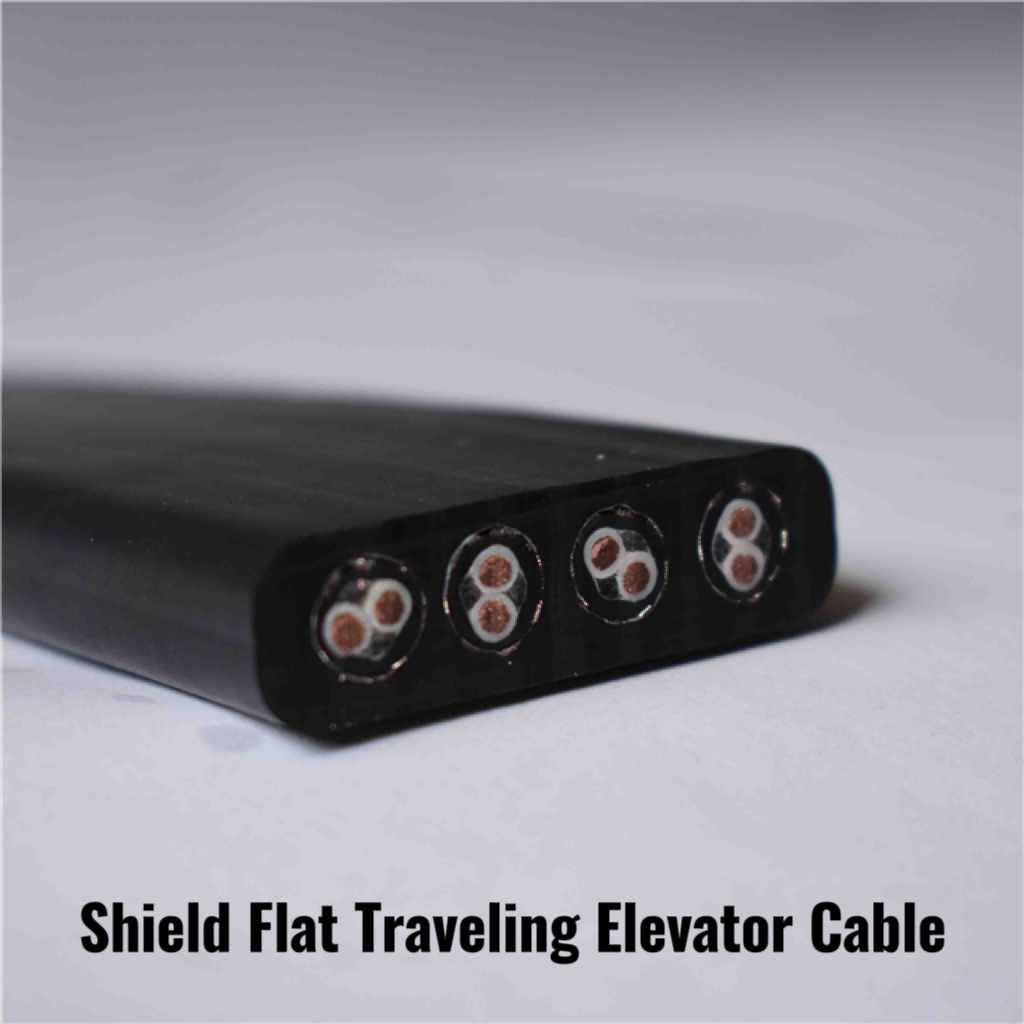
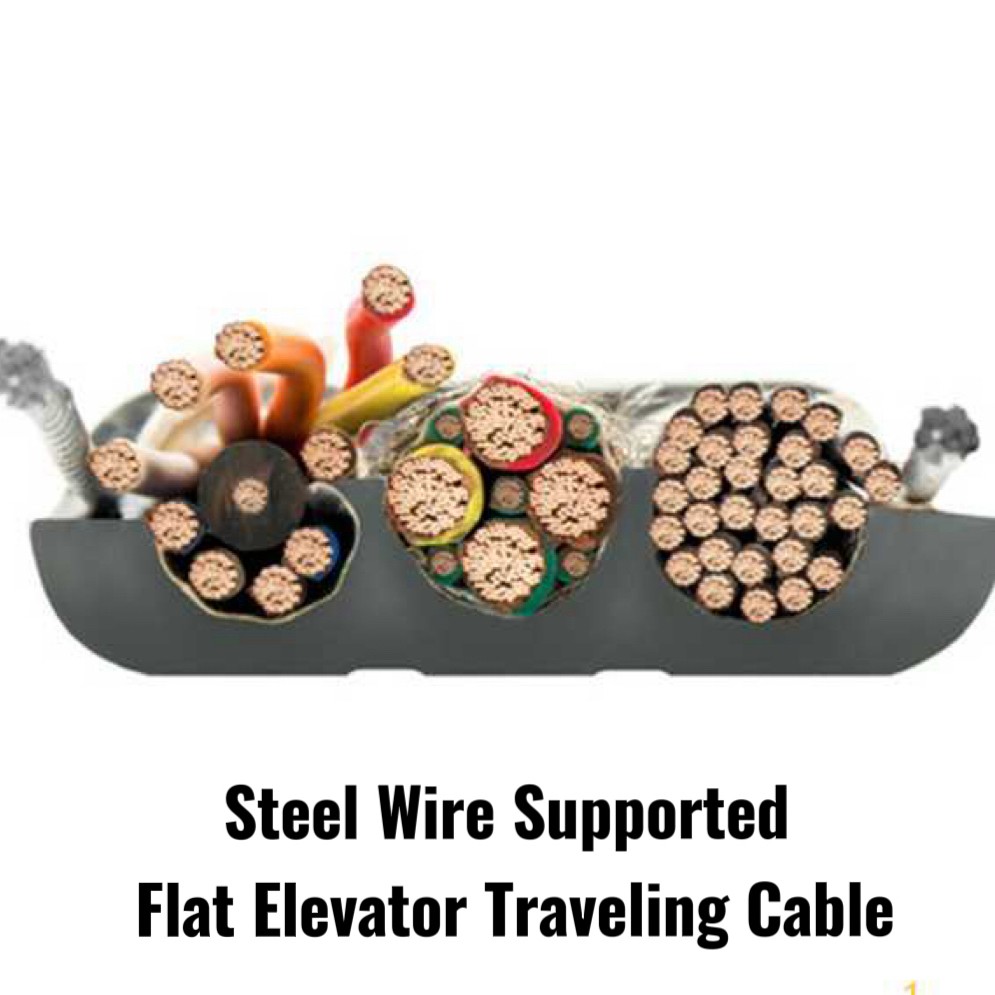
For applications requiring electromagnetic interference protection, the shield flat elevator traveling cable provides a minimum 98 percent tinned copper braiding to ensure stable signal and video transmission. For high rise or heavy load elevators, the steel wire supported flat elevator traveling cable delivers the tensile strength needed to withstand self weight and dynamic forces.
This guide covers structural design, material properties, configurable options, and applications for standard passenger elevators as well as intelligent monitoring systems.
Our Flat Elevator Traveling Cable Series
Based on the features and options described above, we offer a complete series of flat elevator traveling cables to meet different application requirements. Each version is built with fine oxygen-free copper conductors, flame-retardant materials, and flexible flat structure, with optional shielding, tensile elements, and integrated function modules.
Standard Version: PVC sheath, no shielding, nylon tensile element. For general elevators and budget sensitive projects.
Shielded Version: PVC/PUR sheath optional, tinned copper braid shielding. For VFD drives and video surveillance applications.
Steel Wire Reinforced: Steel wire rope tensile element, PUR sheath, shielding optional. For high rise, high speed, and heavy load elevators.
What's next in this article:
In the following sections, we will explain in detail:
Section 1: Cable structure and key features (conductors, insulation, temperature range, bending life)
Section 2: Optional functional modules (fiber optic, signal lines, SDI video)
Section 3: Optional configuration options (sheath materials, shielding, tensile elements)
Section 4-5: Application scenarios and certifications
1. Features
Electrical Performance
Voltage Rating: 0.6/1 kV
Conductor: Fine oxygen-free copper wire, copper content ≥99%, complies with VDE0295 Class 5/6
Insulation Material: PVC, rubber content >45%
Fine oxygen-free copper conductors ensure low resistance and high conductivity efficiency, meeting Class 5/6 fine wire requirements.
Mechanical Performance
Tensile Strength & Wear Resistance: Withstands mechanical shocks from frequent elevator starting/stopping and long-term abrasion inside the hoistway
Flexibility & Bending Resistance: Adapts to thousands of reciprocating bending cycles per day while maintaining structural integrity
Tear Resistance: High-strength sheath design prevents tearing damage during installation and operation
The flat configuration and layered anti-twist core arrangement further enhance mechanical reliability, ensuring stable operation after millions of bending cycles.
Safety Performance
Flame Retardant: IEC60332-1 standard
Temperature Range: Moving (reel-based) installation: -30°C to +80°C
Fixed installation: -40°C to +90°C
Oil, Cold & Weather Resistance: Suitable for indoor, outdoor, and semi-outdoor environments,
The wide temperature range and flame-retardant characteristics ensure safe operation under extreme working conditions.
Service Life
Sheath Material Design Bending Life Recommended Service Period
PUR >5 million cycles Approximately 5 years
PVC Approximately 3 million cycles Approximately 3 years
Actual service life depends on operating frequency, ambient temperature, bending radius, and maintenance conditions. PUR sheath is recommended for high-frequency and harsh environments; PVC sheath is suitable for general working conditions.
Customization Capability
All parameters above can be adjusted according to customer requirements. Sheath material, shielding, tensile element type, and functional modules (fiber optic/SDI/signal lines) are all flexible options. Detailed information is provided in the next section.
2. Optional Functional Modules
Based on standard power transmission cores, this cable series allows flexible integration of the following functional modules according to specific application requirements, enabling combined transmission of multiple signal types.
Fiber Optic Unit
Application: Data communication, remote monitoring, broadband transmission
Advantages: EMI immunity, high bandwidth, stable signal transmission over long distances
The fiber optic unit is suitable for smart elevator systems requiring remote operation and maintenance, IoT connectivity, or building automation integration.
Signal Transmission Line
Application: Control signals, system coordination, sensor signals
Advantages: Integrated design with power cores, reducing separate cabling
Signal transmission lines carry various command signals between the elevator controller and the car, simplifying electrical connections.
SDI Video Transmission Line
Application: HD video surveillance, real-time image transmission
Advantages: Strong anti-interference capability, clear image without delay
The SDI video line is specifically designed for elevator CCTV systems, maintaining stable HD image transmission even in high electromagnetic noise environments.
Integration Benefits
One cable simultaneously transmits:
Power (0.6/1 kV)
Control signals
Data communication
HD video
One flat cable replaces the conventional combination of power cables, control harnesses, communication optical fibers, and video coaxial cables, resulting in a cleaner hoistway layout and easier maintenance.
3. Optional Configuration Options
In addition to functional modules, this cable series supports flexible combinations of the following configuration options. Customers can freely select based on specific project requirements.
Sheath Material
PVC Sheath
Characteristics: Lower cost, design service life of approximately 3 years
Applications: General environments, budget-sensitive projects
PUR Sheath
Characteristics: Wear-resistant, oil-resistant, cold-resistant, design service life of approximately 5 years
Applications: High-frequency operation, harsh environments, long-life requirements
Shielding
Material: Tinned copper wire braid
Braiding Density: Not less than 98%
Function: EMI protection, ensuring stable transmission of control signals and SDI video
The high-density braided shield effectively suppresses electromagnetic noise generated by variable frequency drives and power cables, suitable for applications with high signal integrity requirements.
Tensile Element
Steel Wire Rope
Characteristics: High tensile strength, lower cost
Applications: High-rise buildings, heavy-duty freight elevators, high-speed elevators
Kevlar
Characteristics: Lightweight, good flexibility, corrosion-resistant
Applications: Elevator modernization in existing buildings, limited bending radius, weight-sensitive projects
Installation Position
The tensile element can be added on both sides of the cable (symmetrical positions) or in the center of the core, depending on mechanical design requirements. Both installation methods effectively withstand the cable's self-weight and dynamic tensile forces during operation, preventing conductor stretching and breakage.
Customer Free Combination: Sheath material, shielding, tensile element type, and installation position can all be selected independently. No configuration is locked. Customers can build the most suitable cable solution for their project based on application environment, budget, and performance requirements.
4. Typical Applications
This series of elevator flat cables is suitable for the following typical applications, meeting requirements for long-term bending, tensile strength, and environmental resistance.
Passenger Elevators and Freight Elevators
Escalators and Moving Walkways
Hoisting Equipment and Lifts
Temporary Lifting Systems
Smart Elevator Systems
5. Standards and Certifications
This cable series complies with the following industry standards and certification requirements:
Design Standards
VDE0250P813 (German Association for Electrical Engineering standard)
MT818 (Chinese elevator cable standard)
Flame Retardant Standard
IEC60332-1: Single vertical burn test. The cable self-extinguishes and does not propagate flame.
Environmental Certification
RoHS: Free of hazardous substances, compliant with EU environmental directives.
Compliance Certification
CE: Compliant with EU safety, health, and environmental requirements.
Certification Icons: VDE, CE, RoHS certification marks can be displayed here.
6. Summary
This product series offers the following core values: flame retardancy, tensile strength, wear resistance, long service life, and customizability. It supports on-demand integration of fiber optic units, signal transmission lines, and SDI video lines, meeting diverse requirements ranging from standard elevators to intelligent monitoring systems.
For practical selection, the appropriate combination of sheath material (PVC/PUR), shielding, and tensile element (steel wire rope / Kevlar) should be chosen based on the application scenario, operating environment, and performance requirements.
Post time:2026-06-04
