

Core Functional Modules of ROV Cables
Architecture, Components, and Design Essentials
Introduction of ROV cables
An ROV umbilical cable, often called an ROV cable or tether, is the critical link between surface support platforms and remotely operated underwater vehicles. This cable delivers power, transmits data, and withstands extreme mechanical loads. For engineers and procurement professionals, understanding the cable's core functional modules is essential, whether you are involved in ROV cable design or evaluating ROV cable manufacturers.
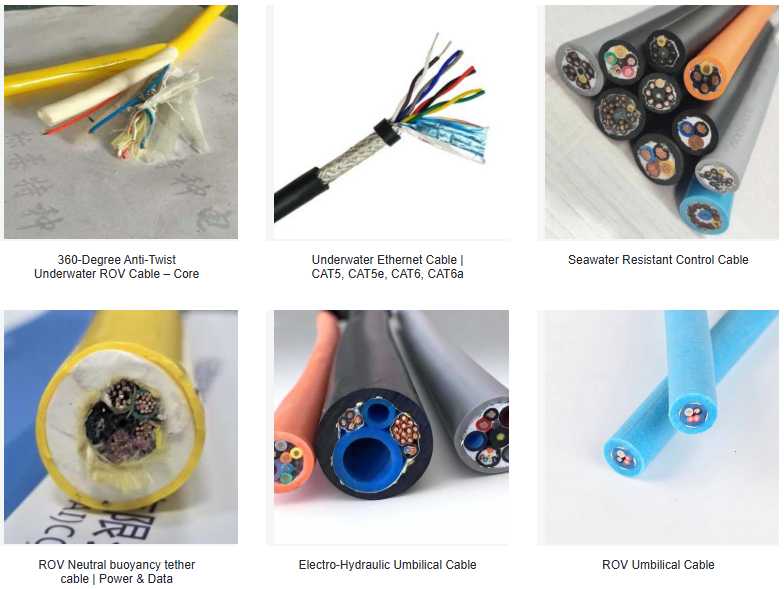
ROV Cable includes the following typical modules
Power Transmission Module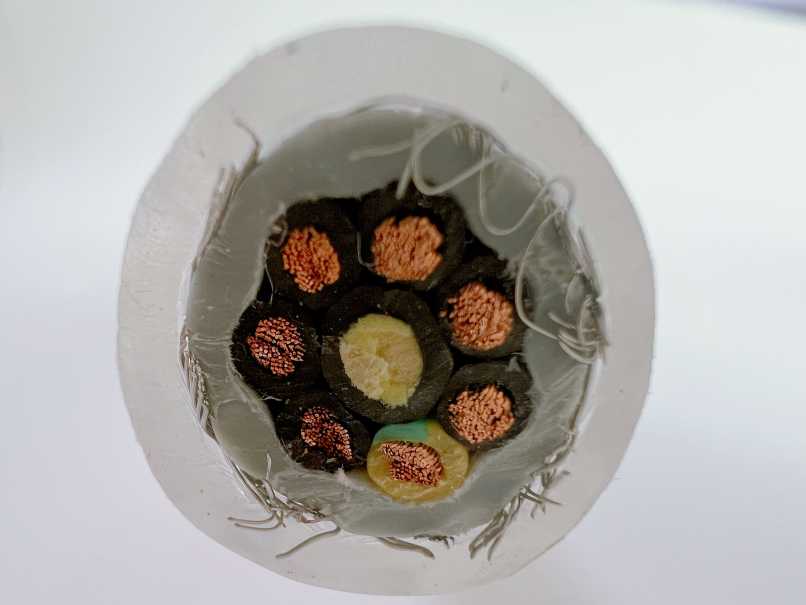
Fiber Optic Communication Module
Metallic Signal Transmission Module
Mechanical Load Bearing Module
Buoyancy and Outer Jacket Module
Sealing and Termination Module
Coupling and Design Trade offs
Weight, strength, and bandwidth
Cost and performance
Flexibility and tensile strength
Engineers must find the balance point that matches specific ROV operational requirements.
Core Functional Modules of ROV cables
1 Power Transmission Module
This module delivers surface power to the ROV, typically using DC to reduce voltage drop along the cable.
Voltage Rating: 600V or 1000V DC for shallow water ROVs; 3kV to 6kV DC for deep water work class ROVs
Conductor Material: Tinned copper or copper alloy, balancing conductivity and seawater corrosion resistance
Cross Section Design: From 2.5mm² for light observation class to 50mm² and above for heavy work class
Insulation Material: EPR or XLPE, providing voltage withstand and flexibility
Thermal Management: Copper losses under high current must dissipate through the jacket; thermal accumulation limits maximum operating current
2 Fiber Optic Communication Module
Fiber optics are the core medium for ROV video and real time data transmission.
Fiber Type: Single mode fiber dominant; multimode for some shallow water applications
Communication Capacity: 1 to 10 Gbps per fiber, supporting multiple HD video channels plus sensor data plus control signals
Protection Structure: Fibers placed in stainless steel micro tubes with thixotropic water blocking gel
Redundancy Design: Typical configuration of 2 to 6 fibers, with 1 to 2 active and the rest hot standby
3 Metallic Signal Transmission Module
While fiber optics handle high speed communication, low speed bidirectional control signals often still use metallic conductors.
Signal Types: RS 485 or 422, CAN bus, 4 to 20mA analog feedback
Shielding Structure: Individual aluminum foil shield plus overall braided shield per twisted pair, crosstalk rejection greater than 60dB
Power Feedback Loop: Some ROVs use dedicated low voltage cores (24 to 48V) for subsea sensor power
Design Consideration: Maintain radial separation from power cores, reduce power frequency interference through partitioned shielding
4 Mechanical Load Bearing Module
This module directly determines the cable's deployment life and ability to withstand unexpected tension.
Tensile Materials: Kevlar for dynamic umbilicals; polyester for static or shallow water; steel wire armor for highest strength but increased weight
Breaking Strength: 1 to 5 tons typical for shallow water ROVs; 10 to 25 tons for deep water work class
Minimum Bend Radius: Typically 6 to 12 times the cable outer diameter
Fatigue Life: Dynamic cables require 10⁵ to 10⁶ bending cycle tests
5 Buoyancy and Outer Jacket Module
Buoyancy design directly affects ROV power consumption and maneuverability.
Buoyancy Design: Neutral buoyancy most common; slightly positive buoyancy for easier recovery
Jacket Materials: Polyurethane (PUR) for abrasion and oil resistance in dynamic deployment; neoprene for seawater corrosion resistance at lower cost
Additional Requirements: Hydrolysis resistance for tropical waters; UV resistance for deck exposure sections
6 Sealing and Termination Module
Although not part of the cable core itself, this module is critical to system reliability.
Watertight Interfaces: ISO 13628 5 or SubConn compatible interfaces, pressure rated to working depth
Strain Relief: Tapered strain cone or multi layer heat shrink stress tubes
Health Monitoring: Some terminations integrate conductor continuity detection and fiber OTDR test ports
Integration and Interference Between ROV Cable Modules
The following interference types must be addressed during ROV umbilical cable design:
Electromagnetic Interference
Power harmonics can couple into metallic signal lines.
Thermal Accumulation
Temperature rise under high current accelerates insulation aging.
Mechanical Stress Transfer
Tension is concentrated in the tensile layer. Countermeasures include redundant tensile design and buffer fillers.
How to Select an ROV Cable Manufacturer
When evaluating an ROV umbilical cable manufacturer, consider the following criteria.
1 Core Capabilities Required
Dynamic cable fatigue test platform for validation of design assumptions
Custom design capability for non standard voltage, core count, and buoyancy requirements
Deep sea project delivery record with verifiable references
2 Evaluation Dimensions
Lead time: Examine standard product inventory levels and custom product production cycles.
Deep sea experience: Review maximum application depth achieved, number of successful projects, and documented failure rates.
After sales support: Assess field repair capabilities, spare parts availability, and technical documentation completeness.
For complete technical documentation of all models covered in this article, including measured fatigue curves, thermal simulation data, and type approval certificates, visit the Product Center.
Post time:2026-06-12
