

Elevator Traveling Cable
The Complete Guide to Selection, Classification, and Materials
A elevator traveling cable is a critical safety and communication component in modern elevator systems. It ensures continuous transmission of power, control signals, safety circuits, and multimedia data between the control cabinet and the moving elevator car.
As elevators become faster and more intelligent, traditional cables can no longer meet the demands of high-speed data transmission and electromagnetic interference protection.
1.What Is a Elevator Traveling Cable?
A elevator traveling cable is a specially engineered flexible cable designed for continuous vertical movement inside the hoistway. it integrates multiple functional cores into a single composite structure, enabling simultaneous transmission of:
Electrical power
Control and safety signals
Communication data
Video and monitoring signals
It is engineered for:
✓High flexibility
✓Tensile strength
✓EMI resistance
✓Long service life.
For detailed specifications and product configurations, see our elevator traveling cable products.
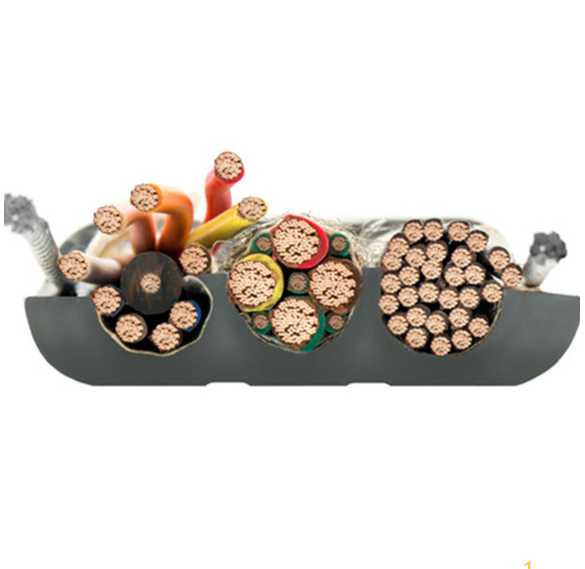
2. Flat vs. Round Elevator Traveling Cable
When selecting a elevator traveling cable, choosing between a flat traveling cable and a round traveling cable is a key decision. Each type is designed for specific elevator system requirements, including building height, travel distance, and signal complexity.
Flat Traveling Cable (Ribbon Structure)
Flat elevator traveling cables use a side-by-side conductor layout.
Key advantages:
Smaller bending radius
Higher flexibility
Lower swing in hoistway
Easier installation in compact shafts
Best for:
Low-rise buildings, residential elevators, short travel systems
For deeper technical details and performance comparison, refer to:
Flat vs Round Elevator Traveling Cable | Key Differences and Selection Guide.
Round Traveling Cable (Concentric Structure)
Round elevator traveling cables use layered concentric conductor design.
Key advantages:
High mechanical strength
Large core capacity (up to 120+ cores)
Better long-distance stability
Improved tensile performance
Best for:
High-rise buildings, high-speed elevators, complex control systems
3. Inside the Elevator Traveling Cable
A modern traveling cable for elevator typically includes multiple functional core types:
Power Cores (Energy Transmission)
Cross-section: 1.0–2.5mm²
Purpose: main elevator power supply
Control Cores (Signal Transmission)
Cross-section: 0.5–0.75mm²
Purpose: elevator control and safety signals
Coaxial Cores (CCTV Systems)
Impedance: 75Ω
Purpose: video surveillance transmission
Shielded Twisted Pairs (EMI Protection)
Structure: foil or braided shielding
Purpose: stable communication signals
Optical Fiber (Smart Elevator Systems)
Purpose: IoT monitoring, high-speed data transmission, remote diagnostics
4. Shielding & Steel Core Design
The performance of a elevator traveling cable depends heavily on two structural decisions:
Shielding Type (EMI Protection System)
Shielding Type | EMI Protection Level | Application |
Aluminum Foil | High-frequency noise | Standard systems |
Copper Braid | Mid/low-frequency EMI | Industrial elevators |
Foil + Braid Composite | Full-spectrum protection | High-end smart elevators |
Functions:
Shielding eliminates electromagnetic interference generated by VFD drives, ensuring stable video, audio, and data transmission.
Steel Core Reinforcement
· No steel core → low-rise, short travel systems
· Galvanized steel wire core → high-rise & high-tension applications
Steel core supports vertical tensile load, ensuring suspension safety and long service life.
Selection Rule
· Travel height > 35m OR speed > 1.6m/s → steel core required
· CCTV / intercom / IoT system → shielding required
Why Shielding Is Important
In modern elevators, variable frequency drives (VFDs) generate strong electromagnetic interference. Without proper shielding in the elevator traveling cable, issues such as video noise, signal distortion, and data loss may occur.
Why Reserve Spare Cores
It is recommended to reserve 2–4 spare cores in the elevator traveling cable to support future system upgrades, reducing the need for cable replacement and lowering long-term maintenance costs.
5. Elevator Traveling Cable Selection Guide
To correctly select a elevator traveling cable, engineers evaluate:
· Building height (low-rise / mid-rise / high-rise)
· Elevator speed (standard / high-speed)
· Signal complexity (basic control vs smart IoT systems)
· EMI environment (VFD interference level)
6. Why Work with Professional Elevator Traveling Cable Suppliers
Choosing experienced elevator traveling cable suppliers ensures:
· Correct engineering-grade cable selection
· Compliance with elevator safety standards (EN / IEC / GB)
· Customized conductor configuration
· Long-term mechanical and electrical reliability
· Reduced maintenance and lifecycle cost
7. Conclusion
A elevator traveling cable is not just an accessory—it is a core safety and communication system in modern elevator engineering.
Proper selection of structure (flat or round), shielding type, and steel core reinforcement ensures:
· Safe suspension performance
· Stable signal transmission
· Reliable long-term operation
Working with qualified elevator traveling cable suppliers is essential for achieving optimal performance in residential, commercial, and high-rise elevator systems.
Post time:2026-06-17
