

What Is a Subsea Cable?
Types, Applications & Selection Guide
Introduction
Subsea cables are the backbone of modern underwater infrastructure, enabling reliable transmission of power, control signals, and high-speed data in some of the world's harshest environments. From offshore oil and gas platforms to underwater robots, scientific research equipment, and offshore wind farms, these specialized cables are designed to withstand seawater, hydrostatic pressure, mechanical stress, and long-term underwater exposure.
Unlike conventional industrial cables, subsea cables require enhanced sealing, corrosion resistance, tensile strength, and environmental protection to ensure continuous performance below the water's surface. Their construction and materials are carefully selected according to the application, installation depth, and operational requirements.
This guide explains what a subsea cable is, the main cable types, typical applications, construction features, and the key considerations for selecting the right solution.
What Is a Subsea Cable?
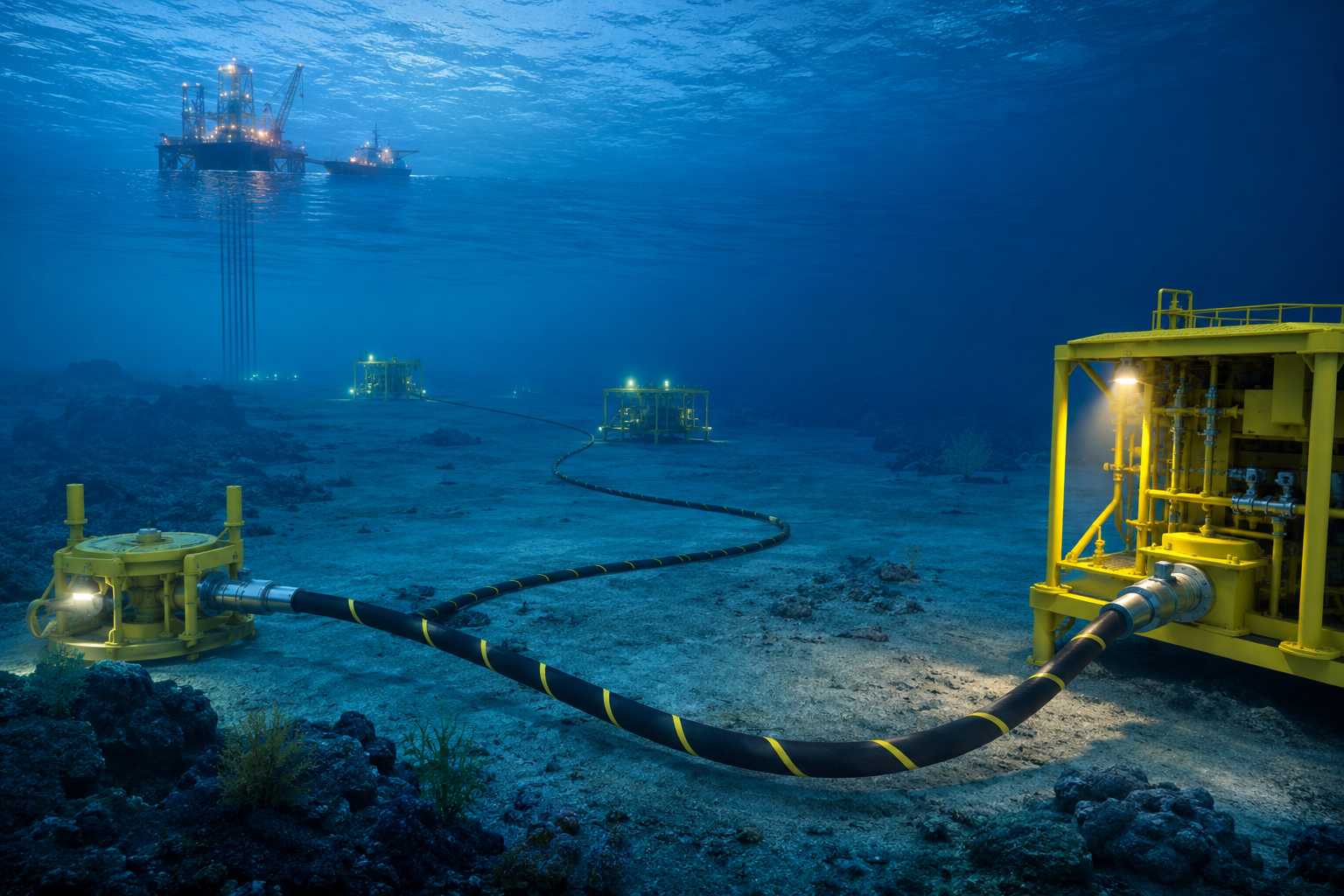
A subsea cable is a specially engineered electrical or optical cable designed to operate in underwater environments for long periods. It can transmit electrical power, control signals, communication data, or a combination of these functions between surface facilities and subsea equipment.
Compared with standard industrial cables, subsea cables are built to resist water ingress, hydrostatic pressure, abrasion, corrosion, and mechanical loading. Depending on the application, they may include armored layers, strength members, water-blocking components, or optical fibers to ensure reliable operation in demanding marine conditions.
Subsea cables are widely used in offshore energy, marine research, underwater robotics, renewable energy, and defense systems where long-term reliability is critical.
Main Types of Subsea Cables
Different underwater systems require different cable designs. Selecting the appropriate cable type depends on the transmitted medium, operating environment, and mechanical requirements.
Subsea Power Cable
Designed to deliver electrical power to underwater equipment such as pumps, sensors, offshore platforms, and renewable energy installations. These cables prioritize electrical performance, insulation integrity, and mechanical durability.
Subsea Control Cable
Used for transmitting control signals between subsea equipment and surface control systems. They are commonly installed in offshore production systems, subsea valves, and automation equipment where accurate signal transmission is essential.
Hybrid Subsea Cable
Hybrid subsea cables integrate power conductors, signal pairs, and fiber optic elements within a single cable. This design simplifies installation while reducing cable weight and improving system integration for complex subsea equipment.
Fiber Optic Subsea Cable
Designed primarily for high-speed data communication, these cables are widely used in underwater monitoring systems, scientific instruments, sonar equipment, and communication networks where signal quality is critical.
ROV Tether Cable
ROV tether cables are specialized subsea cables used to supply power and communication between remotely operated vehicles and their control systems. They are optimized for repeated bending, flexibility, and reliable operation during dynamic underwater missions.
Typical Construction of a Subsea Cable
Although cable designs vary by application, most subsea cables share several common structural components that protect the conductors and ensure reliable underwater performance. To better understand how each layer contributes to cable durability, flexibility, and long-term reliability, read our Subsea Cable Materials & Construction: A Complete Guide.
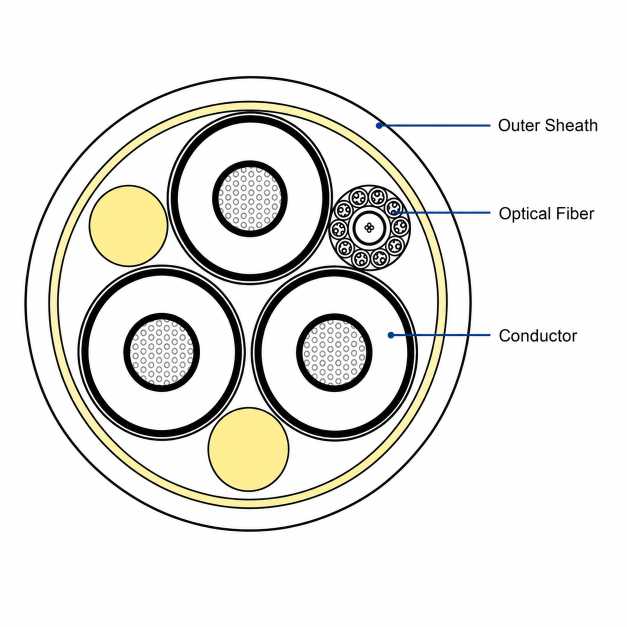
Typical construction may include:
Outer jacket for abrasion and seawater resistance
Armor layer for mechanical protection
Strength members to withstand tensile loads during deployment
Electrical insulation for safe power transmission
Copper conductors or optical fibers for power and communication
Water-blocking materials to prevent moisture migration inside the cable
The exact combination of these layers depends on operating depth, installation method, bending requirements, and environmental conditions.
Common Applications of Subsea Cables
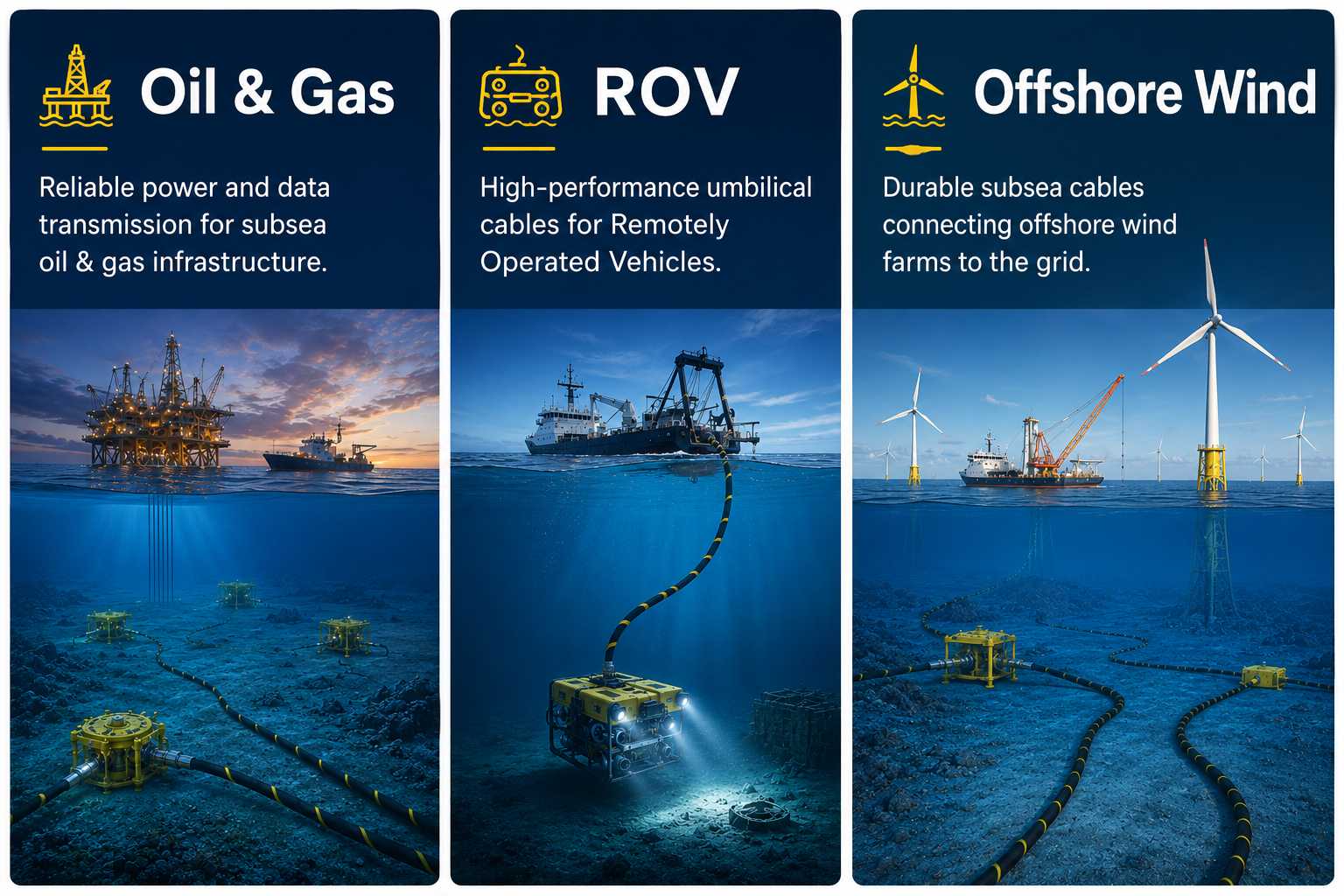
Subsea cables support a wide range of marine industries by providing reliable electrical and communication links between underwater equipment and surface facilities.
Offshore Oil & Gas
Powering subsea production equipment, control systems, pumps, and monitoring devices operating in demanding offshore environments.
Offshore Wind Farms
Connecting offshore wind turbines with substations while transmitting electrical power and operational data over long distances.
Marine Robotics
Supporting remotely operated vehicles (ROVs), autonomous underwater vehicles (AUVs), and underwater inspection systems through reliable power and communication links.
Oceanographic Research
Providing stable connections for underwater sensors, monitoring stations, scientific instruments, and long-term observation platforms.
Port & Harbor Infrastructure
Used in underwater monitoring, navigation systems, security equipment, and port automation applications.
Defense & Security
Supporting sonar systems, underwater surveillance equipment, and naval communication systems where reliability is mission-critical.
How to Choose the Right Subsea Cable
Choosing the correct subsea cable involves much more than selecting a conductor size. The cable must be matched to the operating environment and system requirements to ensure long-term reliability. Key factors include:
Operating depth – Higher pressure requires stronger cable construction.
Power and voltage requirements – Determines conductor size and insulation design.
Data transmission needs – Fiber optic or hybrid designs may be required.
Mechanical loading – Tensile forces during deployment influence strength member selection.
Flexibility – Dynamic applications require cables capable of repeated bending.
Environmental resistance – Abrasion, chemicals, UV exposure, and seawater all affect material selection.
Many subsea projects require custom-engineered cable solutions rather than standard catalog products to achieve the best balance between performance, durability, and installation efficiency.
Why Custom Subsea Cable Solutions Matter
Every underwater project presents unique technical challenges. Water depth, installation method, equipment movement, environmental conditions, and transmission requirements all influence cable performance.
Custom subsea cable solutions allow engineers to optimize conductor configuration, insulation materials, armor design, fiber integration, jacket materials, and mechanical strength for specific operating conditions. This not only improves reliability but can also reduce installation complexity and maintenance costs over the cable's service life.
Working with an experienced cable manufacturer during the early design stage helps ensure the cable meets both operational and environmental requirements while supporting long-term system performance.
Frequently Asked Questions
What is the difference between a subsea cable and an underwater cable?
"Underwater cable" is a general term for cables used below the water's surface, while "subsea cable" usually refers to engineered cables designed for demanding offshore and marine environments with higher mechanical and environmental performance requirements.
Can a subsea cable transmit both power and data?
Yes. Hybrid subsea cables combine electrical conductors and fiber optic elements within one cable, allowing simultaneous power transmission and high-speed communication.
How deep can subsea cables operate?
The operating depth depends on the cable design. Factors such as hydrostatic pressure, armor construction, sealing technology, and installation method determine the maximum depth capability.
What materials are commonly used in subsea cables?
Common materials include copper conductors, fiber optics, TPU or PUR outer jackets, XLPE or EPR insulation, aramid yarn, steel armor, and specialized water-blocking components.
Looking for a Custom Subsea Cable Solution?
Whether your project involves offshore energy, marine robotics, scientific research, underwater monitoring, or renewable energy systems, selecting the right subsea cable is essential for long-term performance. Our engineering team provides customized subsea cable solutions tailored to your electrical, mechanical, and environmental requirements, helping ensure reliable operation in demanding underwater applications. Request Engineering Support
Post time:2026-07-05
