

Custom Neutral Buoyancy ROV Tethers
Manufacturing & Engineering
Why Buoyancy Control Defines the Performance of ROV Tethers
The buoyancy of an rov tether affects ROV maneuverability, power consumption, and TMS wear. An improperly balanced tether forces constant thruster compensation, reducing mission endurance and accelerating TMS fatigue.
Standard tethers with fixed buoyancy cannot match every ROV class, depth, or current condition. This creates the need for custom neutral buoyancy rov tethers. For a general overview of ROV cable design, types, and selection criteria, see What is an ROV Cable? A Technical Guide to Design, Types, and Selection.
This article explains how a custom rov tether manufacturer delivers a working product from engineering drawings, with documented buoyancy control and traceable quality.
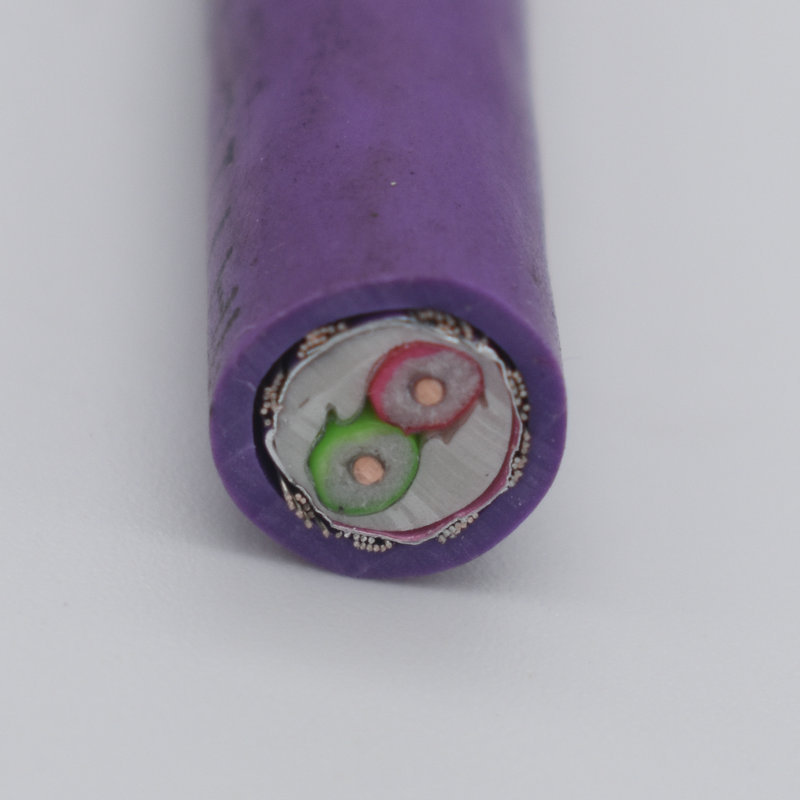
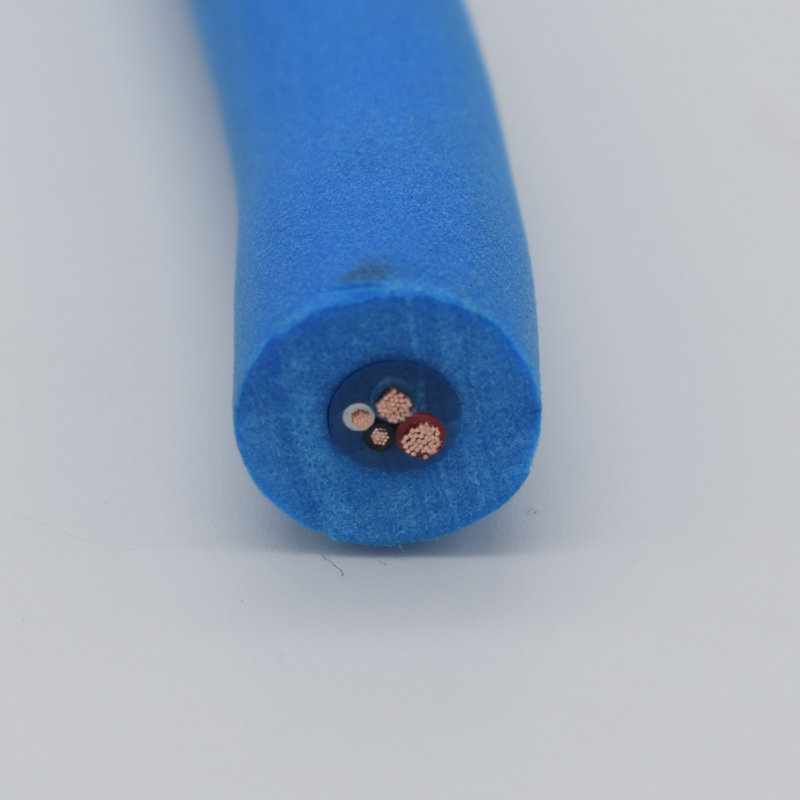
Core Technical Principles of Buoyancy Control for ROV Tethers
1. ROV Tether Buoyancy States
Three buoyancy states are commonly defined for ROV tethers:
Positive Buoyancy: the tether tends to rise. Suitable for shallow water, observation‑class ROVs, and lightweight inspection tasks.
Neutral Buoyancy: the tether remains suspended. Optimal for most work‑class ROVs where precise station‑keeping is required.
Negative Buoyancy: the tether tends to sink. Used in deep water, strong currents, or heavy work‑class operations.
The target density range for neutral buoyancy in seawater (approximately 1.025 g/cm³) is typically 1.02–1.05 g/cm³, depending on salinity and temperature.
2. Why Custom Manufacturing Matters for Neutral Buoyancy ROV Tethers
Standard ROV tethers are designed for general applications. They do not account for mission‑specific variables such as exact depth, ROV thrust characteristics, TMS sheave diameter, or local current conditions.
A custom rov tether manufacturer addresses these variables by engineering each tether to a defined buoyancy target, typically within ±0.02 g/cm³, and by matching mechanical properties to the specific ROV class and TMS.
3. Three Reasons to Customize Neutral Buoyancy ROV Tethers
1. Depth and pressure compensation
Buoyancy materials (syntactic foams) compress under hydrostatic pressure. A tether that is neutrally buoyant at the surface becomes negatively buoyant at depth unless the foam grade and volume are adjusted for the operating depth. Custom engineering calculates the required foam compression margin.
2. TMS compatibility
TMS sheave diameter and drum capacity impose limits on tether diameter and minimum bend radius. A custom design optimizes the layer stack to fit within these mechanical constraints while maintaining the target buoyancy. Off‑the‑shelf tethers often exceed the bend radius limit, accelerating fatigue.
3. Power and data integration
ROV power requirements vary from low‑voltage observation systems to high‑power work‑class vehicles (3 kV to 6 kV). Custom tethers integrate conductors and fiber optics in a layer configuration that balances buoyancy, flexibility, and ampacity. Standard tethers rarely offer this combination.
4. Manufacturing Capabilities for Custom Buoyancy Control
As a neutral buoyancy rov tether supplier with in‑house engineering and production, the following capabilities are available:
| Capability | Description |
|---|---|
| Buoyancy layer engineering | Syntactic foam density selected per depth and target buoyancy; tolerance down to ±0.02 g/cm³ |
| Tensile member selection | Kevlar, Vectran, or polyester based on strength to weight requirements |
| Conductor configuration | Stranded copper, gauged for voltage drop over specified length |
| Jacket material | Polyurethane with specified hardness for abrasion or cut resistance |
| Connector integration | Subconn, Teledyne, or custom overmolding for wet mate or dry mate interfaces |
5. What a Custom Manufacturer Delivers Beyond the Product
A custom rov tether manufacturer provides:
Buoyancy calculation sheet – showing predicted in‑water weight per meter at specified depth
Test report per batch – actual measured buoyancy values at defined intervals
Traceability – material certificates and process records
Design iteration support – adjustments based on prototype test results
They are the reason projects with strict performance requirements specify custom manufacturing.
Partner with a Trusted Custom ROV Tether Manufacturer
Neutral buoyancy is not an optional feature for professional ROV operations, it is a core engineering requirement that directly affects mission success. Custom manufacturing addresses the limitations of standard tethers by matching buoyancy, diameter, and flexibility to the specific ROV class, depth, current, and TMS design.
A custom rov tether manufacturer provides the complete realization path: from drawing review and material selection to precision manufacturing, testing, and delivery.
Ready to specify your custom neutral buoyancy ROV tether? Browse our custom neutral buoyancy ROV tether product line or Contact Our Engineering Team to request a quotation with your project requirements.
Frequently Asked Questions About Custom ROV Tether Manufacturing
Q: What is the minimum order quantity for custom tethers?
A: 500 meters is standard for production orders. Prototype orders (100 meters) are accepted for design validation.
Q: What is the typical lead time?
A: 4–6 weeks, depending on complexity and length. Express service is available on request.
Q: Can you match the buoyancy of an existing tether?
A: Yes. A sample of the existing tether (minimum 1 meter) is required for density measurement and reverse engineering.
Q: Do you provide termination and connector assembly?
A: Yes. Standard connectors (Subconn, Teledyne, SEA CON, etc.) can be integrated. Custom overmolding is also available.
Q: How do you ship a custom tether internationally?
A: Export packaging, commercial invoices, and packing lists are provided. EXW, FOB terms are supported.
Q: What documentation is provided with each order?
A: A factory test report including buoyancy measurements, electrical test results, and dimensional inspection. Material certificates are available upon request.
Post time:2026-02-04
