

ROV Cable Types
Structure & Selection Guide for Subsea Applications
What Is an ROV Cable System?
A ROV cable system provides continuous power, data, and fiber optic communication between a surface control unit and a remotely operated vehicle (ROV). It is designed for reliable operation in harsh subsea environments.
Modern systems integrate power conductors, fiber optic cores, and data lines within a single structure to enable real-time control and high-speed signal transmission. In subsea applications, ROV cable systems are closely related to ROV umbilical cable and ROV tether cable, which serve different structural and operational roles.
ROV Cable Types
Armoured ROV Cable
Designed for high mechanical stress and deep-sea deployment. Used in offshore oil & gas and heavy-duty subsea operations.
Lightweight / Neutral Buoyancy Cable
Reduces underwater load and improves maneuverability for inspection tasks and research missions.
Fiber Optic ROV Cable
Enables high-bandwidth transmission for video, sensors, and real-time control in deep-sea systems.
Hybrid Power & Data Cable
Combines power and fiber optics for simplified deployment and stable subsea performance.
ROV Cable vs ROV Tether Cable vs Subsea Cable
Although the terms ROV cable, ROV tether cable, and subsea cable are often used interchangeably, they actually refer to different roles within underwater and offshore engineering systems.
A ROV cable is the complete system connecting ROV and surface unit, integrating power and data transmission.
A ROV tether cable is the dynamic flexible connection designed for movement and tension handling in inspection-class systems.
Both ROV umbilical cable and ROV tether cable can be considered specialized forms of subsea cable systems.
A subsea cable refers to any underwater cable system used for power or communication in marine environments.
Internal Structure of ROV Cables
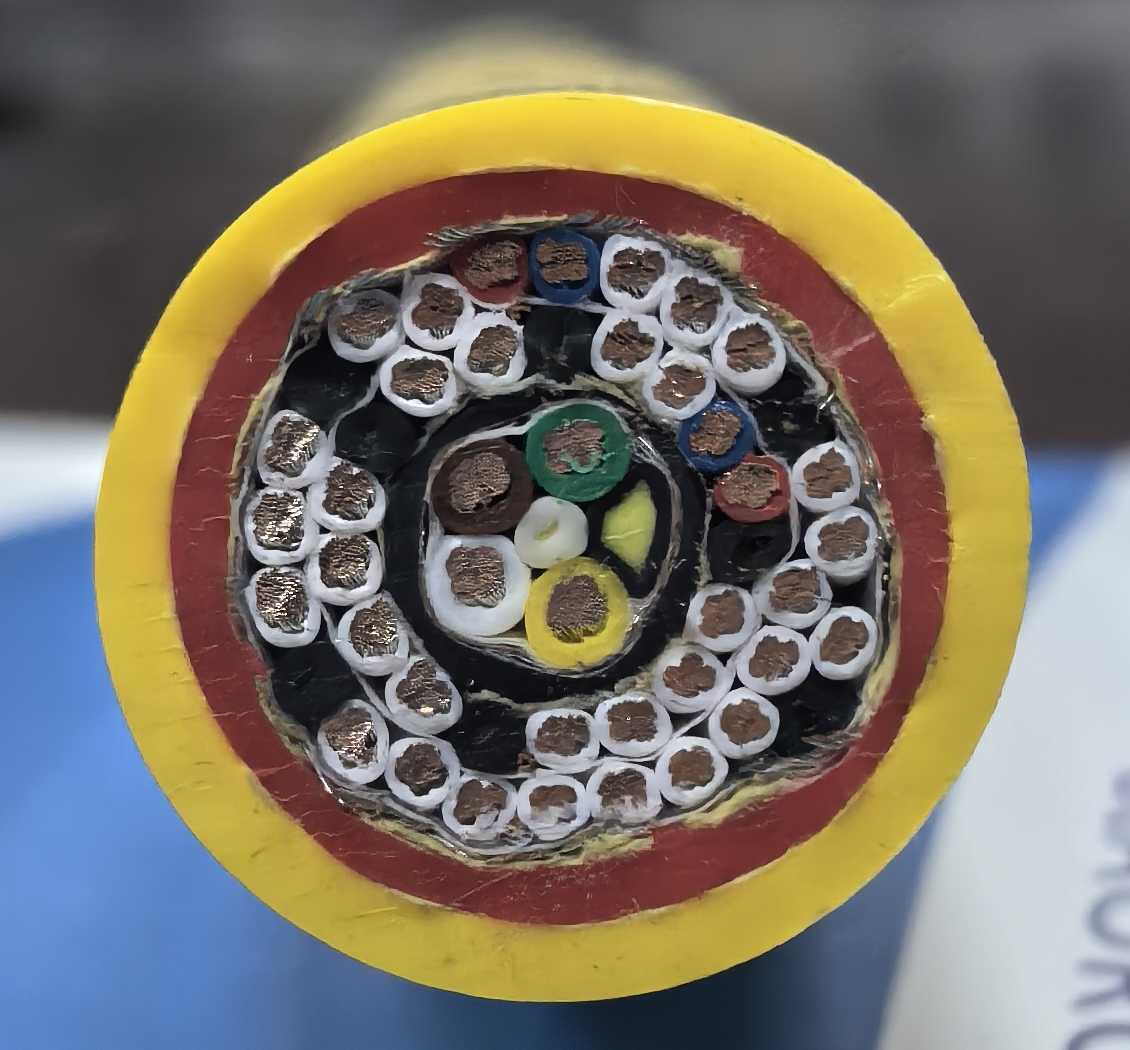
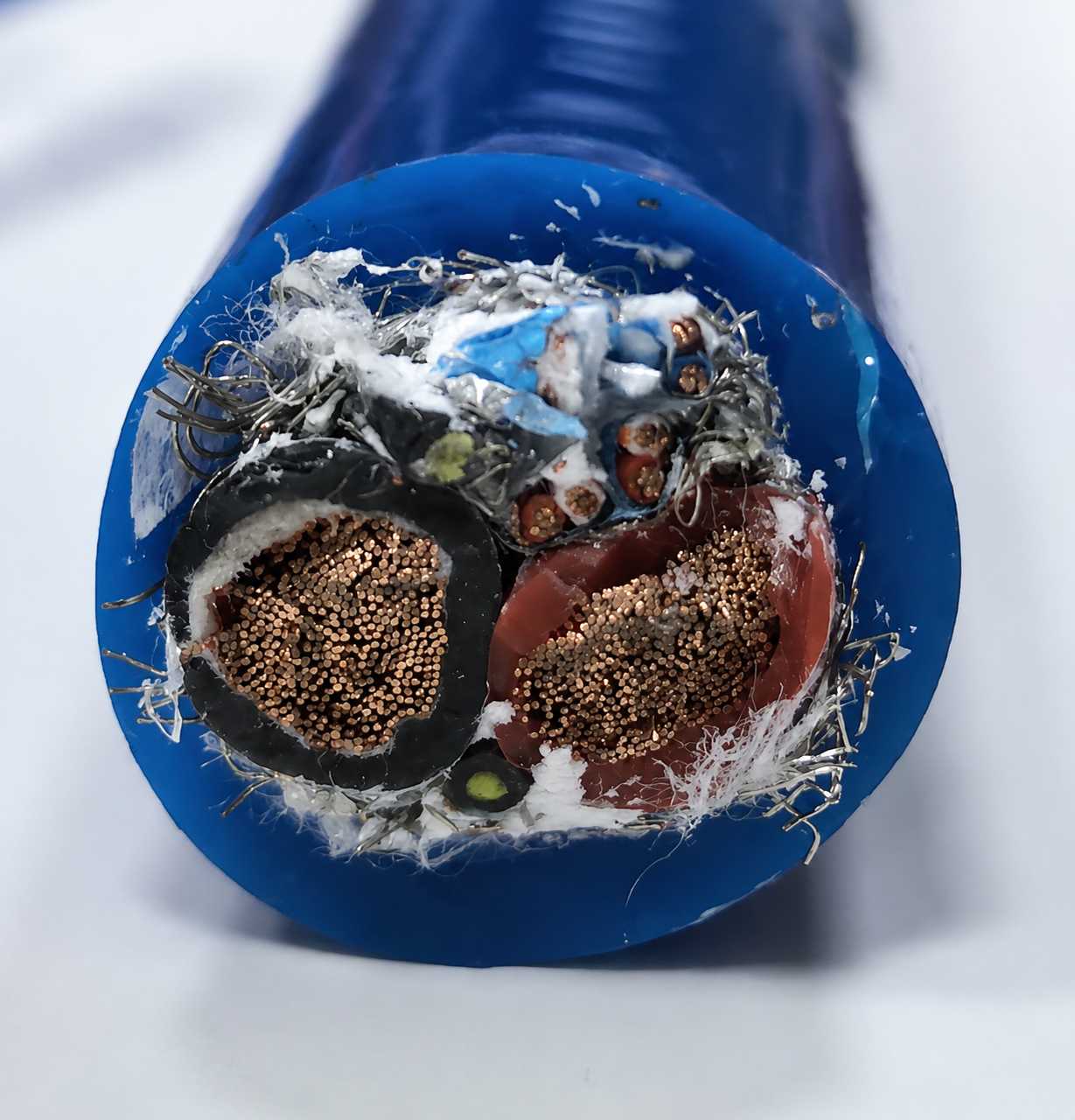
The internal structure of a ROV cable is engineered to ensure reliable performance under extreme subsea conditions. A typical ROV cable system integrates multiple functional layers, each designed to handle specific mechanical, electrical, and communication requirements.
Copper conductors for power
Fiber optic core for data transmission
Kevlar/steel strength member for tensile load
Water-blocking insulation layer
PU/PE outer sheath for protection
These layers ensure stable performance in deep-sea and offshore environments.
Key Engineering Requirements
ROV cable systems operating in subsea environments must meet strict engineering requirements to ensure safe, stable, and long-term performance. ROV cables must meet strict subsea requirements:
High tensile strength for dynamic loading
Pressure resistance for deep-sea environments
Signal integrity via fiber optic systems
Corrosion resistance for long-term exposure
Buoyancy control for operational stability
These requirements define designs such as ROV tether cable and ROV umbilical cable.
How to Choose the Right ROV Cable
Operating Depth
As deeper underwater environments require higher pressure resistance and stronger structural reinforcement. The cable must be designed to maintain stability and integrity under increasing hydrostatic pressure.
Load and tension conditions
Depending on the ROV size and deployment system, the cable must withstand dynamic forces during movement, recovery, and subsea operations without deformation or failure.
Power and data requirements
Systems requiring high-bandwidth communication, real-time video, and advanced sensor feedback typically rely on fiber optic integration within the cable structure.
Environmental conditions (oil & gas, mining, research)
It must also be considered, including oil & gas fields, deep-sea research zones, or harsh mining environments. Each scenario may require different levels of abrasion resistance, corrosion protection, and flexibility.
For specialized applications, customized solutions such as ROV tether cable or ROV umbilical cable are often recommended to match exact mission requirements and ensure optimal system performance.
Applications
ROV cable systems are widely used in:
· Offshore oil & gas inspection and maintenance
· Subsea robotics and underwater inspection
· Marine scientific research and data collection
· Defense and underwater surveillance
Different cable types are selected based on depth, load, and transmission needs.
Custom Manufacturing Capabilities
We provide customized ROV cable systems based on application requirements.
Options include:
· Armored or lightweight structures
· Power + fiber optic hybrid design
· Custom diameter and tensile strength
· Environmental adaptation for subsea conditions
All products are engineered for reliability in offshore and deep-sea environments.
FAQ
What is an ROV cable used for?
To connect ROVs with surface systems for power and data transmission.
Difference between ROV cable and tether cable?
ROV cable is the full system; tether cable is the flexible dynamic connection.
What is a subsea cable system?
Any underwater cable used for power or communication in marine environments.
Can ROV cables transmit power and data?
Yes, most integrate both along with fiber optics.
Do you offer custom solutions?
Yes, custom ROV tether and umbilical cable designs are available.
Need a Custom ROV Cable Solution?
We provide engineered ROV cable systems designed for offshore energy, subsea robotics, and deep-sea exploration applications. Contact our engineering team for technical consultation, datasheets, or customized cable design support.
Post time:2026-06-28
