

In underwater robot applications, cables serve as the critical link for power and data transmission. However, a frequently overlooked yet vital aspect is the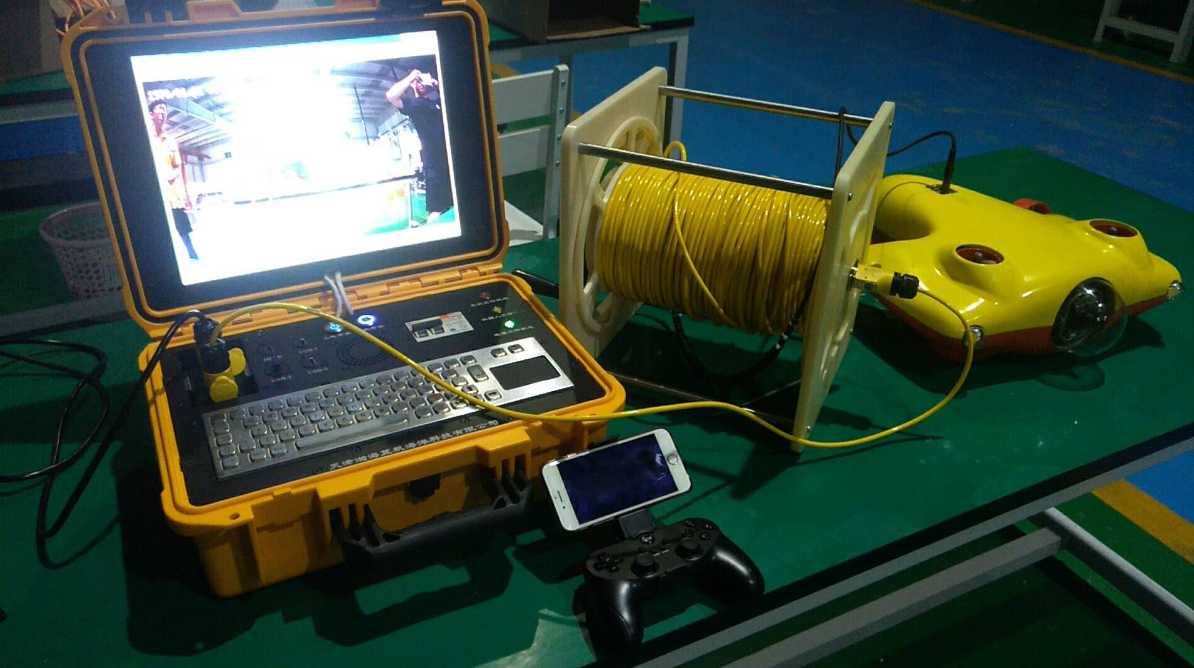 connection point between the cable and the underwater equipment itself. This interface is often the most vulnerable part of the entire system, representing the point most susceptible to water ingress.
Regarding the waterproofing treatment of this key junction, established industry practices exist: "For underwater installations, using a conduit for cable routing provides the most effective waterproofing; if the cable must be connected directly to the equipment, the cable itself must possess a water-blocking structure, and polyethylene is the recommended material for the outer sheath." This principle is grounded in rigorous material science and engineering logic. This article provides an in-depth analysis of the underlying principles.
I. The Specific Challenge of the Connection Point: Why is it the Focus of Waterproofing?
When discussing underwater cable waterproofing, it's essential to recognize that the connection point is not a simple "joint" but a point of structural discontinuity. Here, the end of an otherwise sealed cable must have its sheath removed to connect the internal conductors to the equipment's connector or feed through.
This introduces several issues:
Structural Breach: The outer sheath is cut at the connection point, creating a potential pathway for water to enter the cable.
Material Interface: Multiple materials converge here—metal conductors, insulation, fillers, and sheath—each with different coefficients of thermal expansion, making it prone to forming microscopic gaps.
Stress Concentration: This area often experiences mechanical stresses such as bending and vibration, increasing the risk of seal failure.
Consequently, the industry consensus favoring "conduit routing first" and "specific structures for direct connection" arises from these challenges.
II. Conduit Routing: Creating an Independent Waterproof Compartment for the Connection
Where conditions permit, industry experts generally recommend using conduit for underwater cable installation, particularly at connection points.
Principle: Physical Isolation + Structural Protection
A conduit (typically made of polyethylene or nylon) extends to the equipment interface and closely mates with the equipment's seals, forming an enclosed cavity. The cable connection to the equipment is made within this dry cavity. Even under significant external water pressure, as long as the seal between the conduit and the equipment interface is reliable, water cannot reach the connection point.
The elegance of this method lies in its simplification: it reduces a complex, multi-material sealing problem to a single-interface sealing problem—managing the interface between the conduit and the equipment. This significantly lowers the risk of failure and facilitates future maintenance and replacement.
Engineering Value:
Creates a Permanently Dry Layer: Completely isolates the connection from water.
Reduces Mechanical Damage Risk: The conduit acts as armor, absorbing external forces.
Facilitates Future Maintenance: Cable replacement can be performed without underwater work on the connection itself.
III. Direct Connection: A Multi-Layer Protection System within the Cable Itself
When conduit use is impractical due to space, cost, or terrain constraints, the cable must connect directly to the equipment. In this case, the cable's own structure must provide inherent protection. This leads to two key design features: water-blocking tapes and a polyethylene outer sheath.
1. Water-Blocking Tape: The "Smart Sentry" Against Longitudinal Water Migration
A primary concern for cables is not just external water ingress, but water migrating longitudinally along the cable's interior. If a minor breach occurs in the outer sheath near the connection point (e.g., a slight scratch during installation), water can travel long distances along the conductor interstices due to capillary action and pressure differentials. This can corrode the connection point and propagate along the cable interior, potentially ruining entire cable sections.
Operating Principle:
Water-blocking tape contains hygroscopic (water-swellable) powder. In its dry state, it is flexible and suitable for wrapping during manufacturing. Upon contact with water, it rapidly absorbs many times its own volume, swelling and creating pressure that seals off the potential water path.
Why is it Critical at the Connection Point?
At the connection, the outer sheath is stripped, exposing the internal structure. Placing water-blocking tape near this region creates a crucial internal defense. If a minor sheath breach occurs during stripping or operation, water ingress triggers the tape to swell, localizing the water penetration and preventing it from migrating deeper into the cable. This "smart response" mechanism provides invaluable protection at the connection.
2. Polyethylene Outer Sheath: The Impermeable "Fortress Wall"
If water-blocking tape acts as an internal sentry, the outer sheath is the primary barrier against water pressure. The recommendation of polyethylene (PE) for this role is based on fundamental material properties.
Comparative Insights:
While common polyvinyl chloride (PVC) sheaths are cost-effective and flexible, their molecular structure results in a relatively high water vapor transmission rate. Under prolonged immersion, water molecules can permeate through a PVC sheath in vapor form, potentially condensing inside the connection area and leading to reduced insulation resistance. For the connection point, this means a slow but continuous degradation of performance.
Key Advantages of Polyethylene:
Extremely Low Permeability: Among common cable sheath materials, polyethylene exhibits the lowest water vapor transmission rate. Its highly ordered molecular structure and high crystallinity make it very difficult for water molecules to penetrate, ensuring long-term dryness at the connection interface.
Excellent Hydrolysis Resistance: Connection points are often exposed to complex environments containing salts, microorganisms, or chemicals. Polyethylene is chemically stable, does not react with water, and resists softening, swelling, or cracking during long-term immersion.
Abrasion and Environmental Stress Resistance: Polyethylene also offers good abrasion resistance and resistance to environmental stress cracking, effectively withstanding dragging and friction during underwater deployment. This is particularly important for the connection point, which bears mechanical stress.
IV. The Technical Logic of the Three-Layer Protection: From Principle to Practice
Understanding the unique challenges of the connection point clarifies the rationale for these specific material requirements. This constitutes a comprehensive, multi-layered defense system:
Conduit Routing: Establishes an independent dry space for the connection, simplifying sealing to a single interface.
Polyethylene Outer Sheath: Prevents water molecule ingress at the material level, ensuring the connection's base protection is robust.
Water-Blocking Tape: Provides a water-swellable mechanism near the connection to contain damage from accidental sheath breaches.
Logical Closure of the Three-Layer System:
External Priority: Use a conduit whenever possible, as it is the most reliable method.
Material Foundation: When a conduit is not feasible, the cable itself must incorporate a low-permeability polyethylene sheath.
Internal Safeguard: Integrate water-blocking tape within the sheath as a final defense against unexpected damage.
V. Engineering Implications for Selection and Application
In practice, the reliability of an entire underwater robotic system often hinges on the cable-to-equipment connection. Understanding the underlying principles of materials aids in making informed technical decisions:
Assess Installation Conditions: Where the operational environment permits, prioritize conduit routing to the equipment interface for the most reliable waterproofing.
Verify Cable Construction: If direct connection is necessary, ensure the cable incorporates a water-blocking structure near the connection point. A key inquiry to suppliers should be: "Does the cable utilize water-swellable tape?"
Verify Sheath Material: Confirm the outer sheath is indeed polyethylene, not standard PVC. This is critical for long-term service life under continuous immersion.
Pay Attention to Connection Handling: The connection point is the waterproofing priority. Exercise extreme care during installation to avoid sheath damage and ensure reliable sealing component fitment.
The harshness of the underwater environment demands meticulous attention to detail. Waterproofing the connection point is a prime example of this engineering necessity. A firm grasp of these principles allows for more effective handling of practical challenges in underwater robotics, ensuring the long-term reliability of this essential link.
Copyright and Sharing Notice
© 2025 RouLine. The article "Underwater Robot Cable Connection Waterproofing: Material Selection & Engineering Principles" is an original technical publication of our company. No individual or organization may reproduce or use this article for commercial purposes without prior authorization.
We welcome sharing on non-commercial platforms for the purpose of learning and exchange, provided that the original author and source link are clearly credited.
Article Information
Author: RouLine
Source: Knowledge
Original Link: https://www.rouline.com/underwater-robot-cable-connection-waterproofing-n.html
Publication Date: 20thFeb.2026
To Learn More
If you have requirements for custom underwater equipment cables or wish to obtain more technical documentation, please contact us via our official website at www.rouline.com or by email at inquiry@rouline.com.
Post time:2026-02-20
