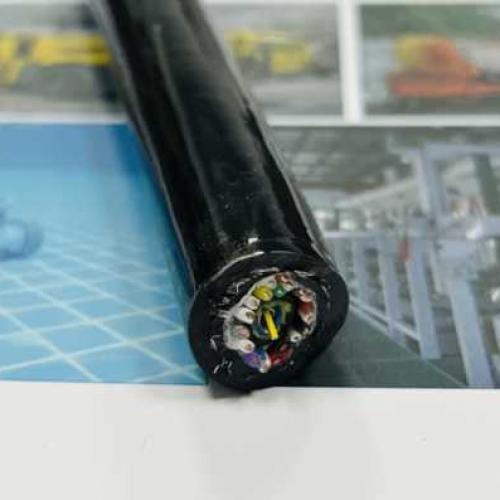
LARS Cable Solutions

LARS Cable Solutions
for Launch and Recovery Systems
LARS Cable Solutions are custom-engineered cables designed for Launch and Recovery Systems (LARS) used in remotely operated vehicle (ROV) deployment and retrieval operations. These cables support reliable power, signal, data, and optical transmission while withstanding repeated movement, tensile loading, abrasion, and demanding offshore conditions.
RouLine manufactures custom LARS umbilical cables and ROV tether cables with tailored conductor configurations, fiber optic integration, reinforcement structures, and protective jackets to meet the mechanical and transmission requirements of different launch and recovery systems.
In some marine and offshore projects, LARS cable solutions may be integrated with Deck Cable or Shipboard Cable arrangements depending on system design and installation requirements.

Cable Requirements
Repeated Bending, Bending Radius & Handling
↗ Support repeated bending and flexing cycles
↗ Maintain flexibility and handling performance within the required bending radius
High Mechanical Loads
↗ Withstand tensile, compression, and torsional loads
↗ Maintain mechanical integrity under dynamic loading and ROV towing forces
Abrasion, Mechanical Wear & Harsh Marine Exposure
↗ Resist abrasion, mechanical wear, and repeated seawater exposure
↗ Withstand salt spray, UV exposure, drilling fluids, and oil contamination
EMI Protection & Signal Integrity
↗ Reduce electromagnetic interference and signal disruption
↗ Maintain reliable video, data, and control signal transmission
System Integration & Subsea Connectivity
↗ Support reliable integration with LARS and subsea equipment
↗ Maintain secure power, signal, and data connections during operation
Cable Solutions
RouLine cable solutions below represent typical designs with different functional characteristics, from ultra-flexible small-diameter cables for compact ROVs to armoured and heavy-duty cables for demanding subsea operations.
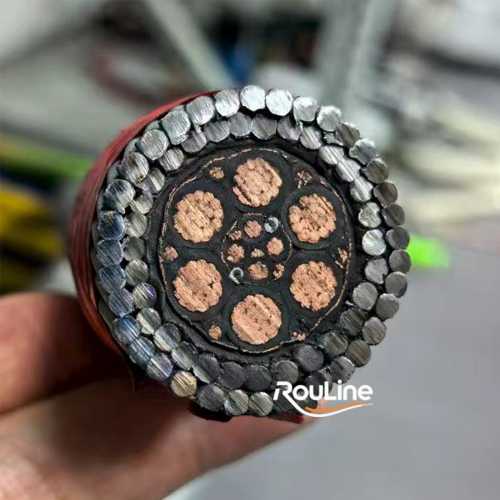
Armoured ROV Umbilical Cable
Designed for ROV and LARS applications requiring enhanced mechanical protection, abrasion resistance, and reliable operation in demanding subsea environments.
→ View more about Armoured ROV Umbilical Cable
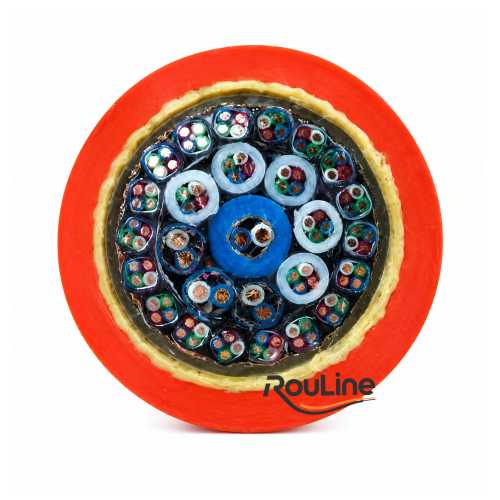
Hybrid Subsea Cable
Suitable for LARS systems requiring integrated power, signal, data, and fiber optic transmission in a single cable.
→ View more about Hybrid Subsea Cable
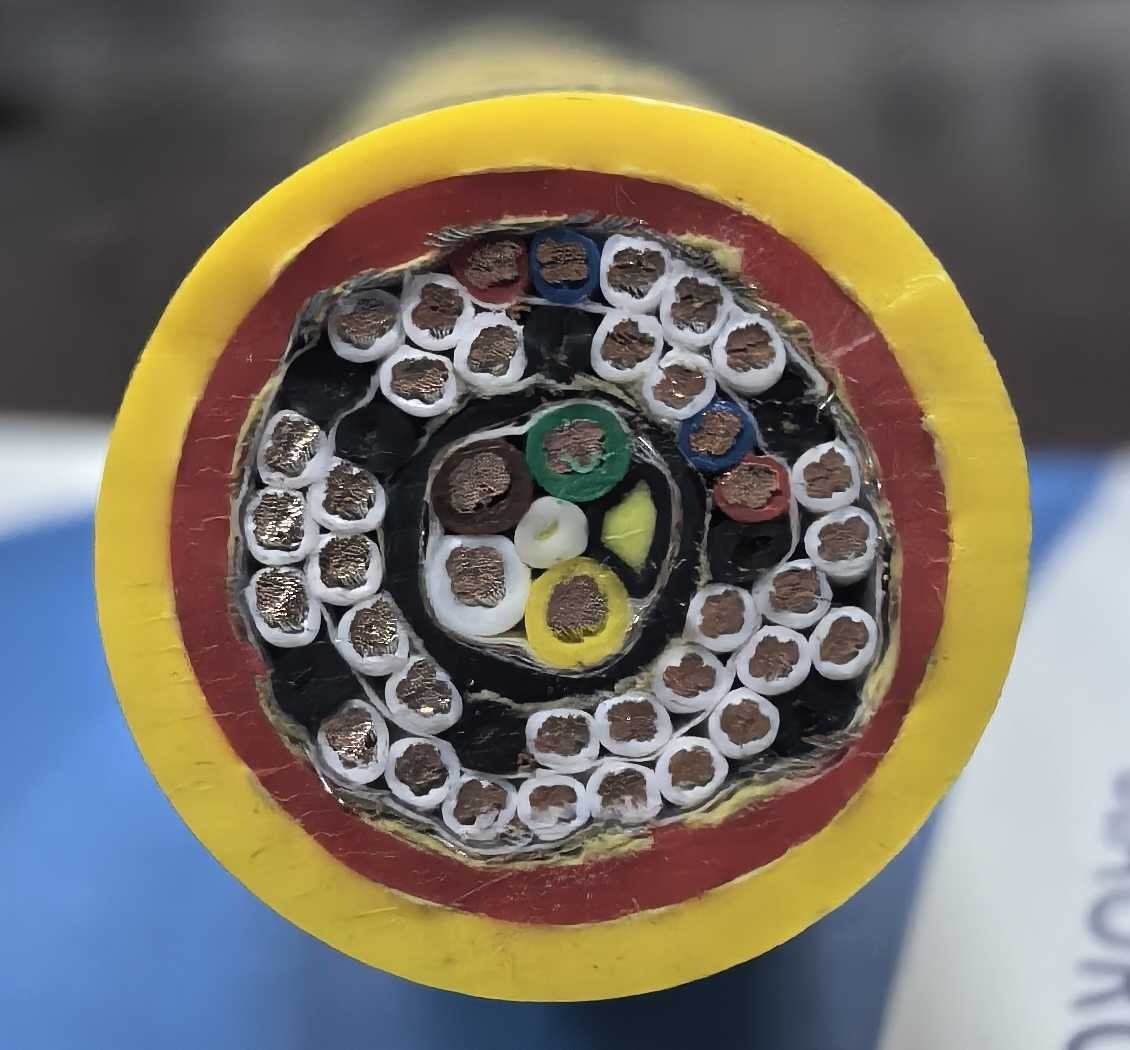
ROV Umbilical Cables
Suitable for LARS operations involving ROVs, providing combinations of power, control, signal, and communication functions.
→ View more about ROV Umbilical Cables
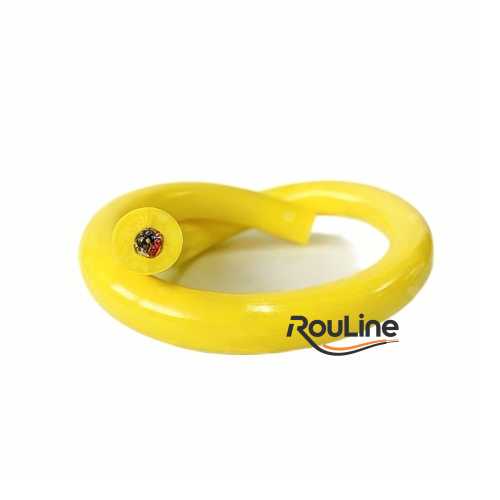
Ultra High Flex ROV Tether Cable
Designed for compact and lightweight ROVs, providing ultra-high flexibility and small diameter for repeated launch and recovery cycles.
→ View more about Ultra High Flex ROV Cable
LARS Cable Engineering & Specifications
RouLine provides custom cable design and manufacturing for LARS cable solution, with cable constructions engineered around each project’s equipment, operating conditions, and performance requirements. Cable construction, materials, dimensions, and performance can be customized to meet specific project requirements.
Typical Configurations — Fully Customizable
3×4 + 8×1.0 + 8FO PUR
3×16 + 12×1.5 + 12FO
Rated Voltage: 300/500V, 0.6/1kV, 3kV, 6kV
Fiber Optics Unit: single-mode or multi-mode. Optional stainless-steel tight-buffered tube reinforcement.
Cable Construction
Water Blocking: Water-blocking yarn + compound for longitudinal water tightness
Outer Jacket: PUR / TPU
Lightweight ROV Cable: Kevlar tensile reinforcement
Heavy Duty ROV Cable: Stainless-steel wire armor for high tensile strength
Mechanical & Subsea Design
Breaking Load: ≥ 2.5 × maximum working load of the winch
Minimum Reel Bottom Diameter: ≥ 8 × cable outer diameter to reduce compression and potential fiber damage
Water Tightness: Longitudinal and transverse water blocking designed according to maximum operating depth
Deepwater Fiber Unit: Stainless-steel tight-buffered fiber optic units available for deepwater applications
Marine Classification: Support CCS, DNV, and ABS survey requirements
Custom Cable Engineering Capability
Custom Cable Design
Cable structures are engineered according to application requirements, including electrical configuration, mechanical loads and installation conditions.
Material Selection
Materials are selected based on environmental factors such as seawater exposure, temperature, abrasion and flexibility requirements.
Manufacturing & Assembly
From conductor preparation and insulation extrusion to shielding, armouring and final assembly, our manufacturing processes are controlled to deliver reliable custom cables for demanding industrial and subsea applications.
Testing Capability
Mechanical and electrical testing is performed to verify cable reliability and performance before delivery.
FAQ
1. What cable requirements are critical for LARS operations?
LARS cable requirements depend on the launch and recovery method, vehicle weight, deployment depth, and cable routing. Key considerations include tensile load capacity, dynamic bending performance, abrasion resistance, and reliable power, signal, data, or fiber optic transmission. For systems involving repeated deployment and retrieval, the cable construction must also suit the winch, sheaves, and expected operating cycles.
2. How do you select a tether cable for underwater vehicles?
Selecting a tether cable requires evaluating the vehicle's power and communication needs, operating depth, required cable length, tensile loads, and movement profile. For dynamic applications, flexibility, minimum bend radius, abrasion resistance, and fatigue performance are important. If high-bandwidth communication is required, a fiber optic tether may be suitable; if the cable must carry both power and data, a hybrid construction may be considered.
See our ROV Tether Cable, Ultra Flexible ROV Tether Cable, and Fiber Optic ROV Cable options.
3. What is the difference between an LARS umbilical cable and an ROV tether cable?
An LARS umbilical cable typically serves the launch and recovery system's cable-handling and vehicle-connection requirements, while an ROV tether cable commonly connects the vehicle to its control or support system. Their functions can overlap depending on the ROV architecture. Selection should be based on the actual cable routing, load-bearing role, transmission requirements, and handling equipment rather than the product name alone.
4. Should LARS cables use steel wire armor or flexible reinforcement?
The choice depends on the required tensile capacity, abrasion exposure, cable diameter, bending radius, and handling method. Steel wire armor can provide mechanical protection and contribute to tensile performance when properly designed. Flexible reinforcement may be more suitable for certain dynamic applications where repeated bending is a priority. The reinforcement structure should be selected according to the complete mechanical load case.
Learn more about our Armored ROV Umbilical Cable solutions