Hoist Cables for Electric Hoists & Lifting Equipment
Hoist Cables
for Electric Hoists & Lifting Equipment
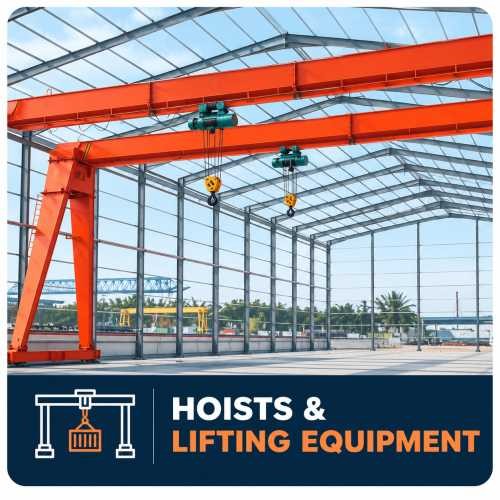
Hoist cables are used in electric hoists and industrial lifting equipment to transmit electrical power, control signals and auxiliary signals during lifting and lowering operations. They are designed to accommodate repeated movement, mechanical stress and the operating conditions of industrial lifting systems.
RouLine manufactures custom industrial hoist cables for electric wire rope hoists, electric chain hoists and other lifting equipment. Depending on the equipment configuration and cable installation, our solutions include flexible festoon cables, reeling cables and specialized spreader cables, with customized conductor configurations, cable dimensions and material options to meet specific application requirements.
Cable Requirements
Selecting cables for electric hoists and lifting equipment requires consideration of electrical ratings, cable movement, installation methods and operating environments.
↗ Electrical Performance: Appropriate voltage ratings, conductor cross-sections and configurations for motor power, control and auxiliary circuits.
↗ Flexibility: Flexible conductors and cable constructions suitable for repeated bending and continuous equipment movement.
↗ Mechanical Resistance: Resistance to abrasion, tensile stress and mechanical wear during lifting operations.
↗ Environmental Protection: Insulation and sheath materials selected for exposure to oil, moisture, dust and temperature variations.
↗ Cable Installation: Flat or round cable configurations suitable for festoon systems, cable reels and other moving cable arrangements.
Cable Solutions
We provide customized cable solutions for different hoisting and lifting systems, covering power supply, control and electrical connections. Cable types are selected according to equipment design, cable routing and movement requirements.
Recommended Cable Products
Festoon Cable
Flexible flat and round festoon cables for electric hoists and lifting equipment using C-track or festoon cable systems.
→ View more about our Reeling Cable
Spreader Cable
Specialized cables for container crane spreader systems, providing electrical connections for spreader power and control functions.
→View more about our Spreader Cable
Reeling Cable
Flexible power cables for lifting equipment equipped with cable reels, designed for repeated winding and unwinding operations.
→ View more about our Reeling Cable
Case Study
A custom reeling cable solution engineered for Tianjin Port crane system, power transmission, high dynamic flexibility, tensile strength, and marine environmental resistance.

Reeling Cable Project for Tianjin Port
Custom Cable Engineering Capability
Custom Cable Design
Cable structures are engineered according to application requirements, including electrical configuration, mechanical loads and installation conditions.
Material Selection
Materials are selected based on environmental factors such as seawater exposure, temperature, abrasion and flexibility requirements.
Manufacturing & Assembly
From conductor preparation and insulation extrusion to shielding, armouring and final assembly, our manufacturing processes are controlled to deliver reliable custom cables for demanding industrial and subsea applications.
Testing Capability
Mechanical and electrical testing is performed to verify cable reliability and performance before delivery.

FAQ
1. What types of cables are used in electric hoists?
Electric hoists commonly use flexible power cables, control cables and auxiliary signal cables. Festoon cables and reeling cables are selected according to the hoist's cable management system.
2. What is the difference between hoist cables and crane cables?
Hoist cables are primarily used in lifting mechanisms for power and control connections, while crane cables may also serve long-travel movements, trolley systems and other crane functions.
3. What are electric hoist power cables used for?
Electric hoist power cables supply electricity to lifting motors and associated electrical components, supporting reliable lifting and lowering operations.
4. Which cables are suitable for electric chain hoists and wire rope hoists?
Flexible festoon cables are commonly used in hoists with festoon arrangements, while reeling cables can be used in systems equipped with cable reels. Selection depends on equipment design and cable movement.
5. What is the difference between flat and round hoist cables?
Flat cables are commonly used in festoon systems where compact cable arrangements are required. Round cables offer alternative installation options depending on the cable routing and mechanical requirements.
6. How do you select cables for lifting equipment?
Consider rated voltage, conductor cross-section, number of cores, cable length, movement frequency, installation method and operating environment when selecting lifting equipment cables.
7. What materials are used for industrial hoist cables?
Common insulation and sheath materials include PVC, rubber, PUR and other specialized compounds. Material selection depends on flexibility, abrasion resistance, temperature and environmental requirements.
8. Can hoist cables be customized for specific lifting equipment?
Yes. Custom hoist cables can be manufactured with different conductor configurations, cross-sections, insulation materials, sheath materials and cable constructions according to equipment specifications.