multi-core composite watertight cable

multi-core composite watertight cable
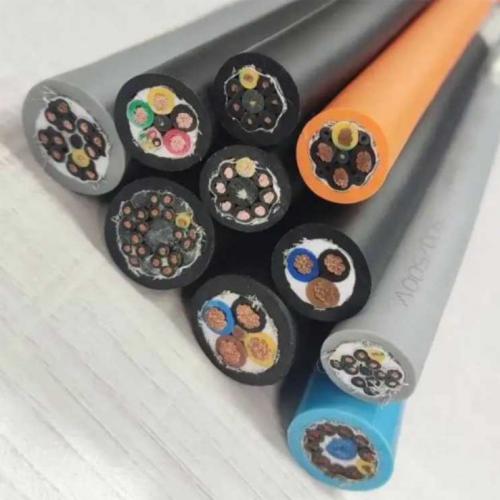
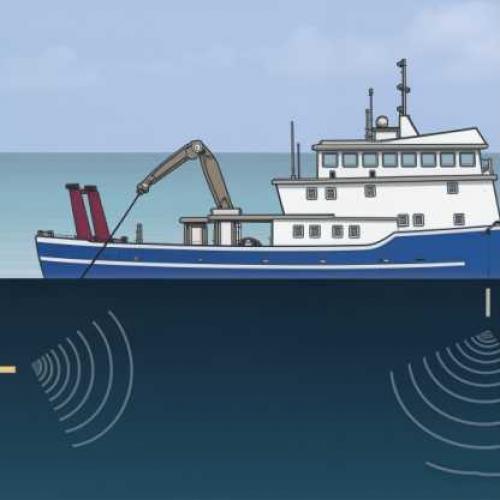
This multi-core composite watertight cable is engineered for demanding underwater environments in marine exploration, ROV operations, offshore oil & gas, and shipbuilding. It integrates power supply, signal transmission, and control functions into a single robust assembly, offering a unified electrical interconnect solution. The cable’s construction and material choices are specifically optimized to withstand long-term exposure to hydrostatic pressure, seawater corrosion, mechanical abrasion, and electromagnetic interference.
Parameters
Number of Cores: 4 to 60 cores (customizable configuration based on user requirements)
Rated Voltage: 0.6/1 kV
Conductor Cross-Sectional Area: 0.5 mm² to 16 mm² (mix of different sizes per core possible)
Maximum Operating Water Depth: 100 m to 10,000 m (custom pressure rating)
Operating Temperature Range: –40°C to +85°C
Construction
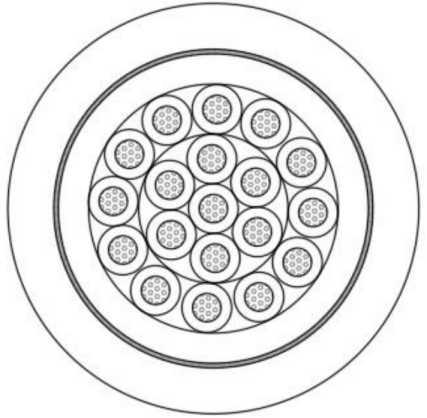
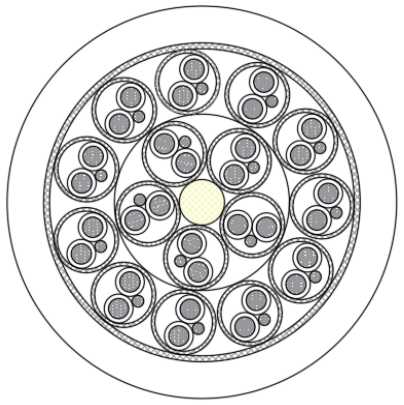
1. Conductor: Stranded high-purity (99.99%) annealed oxygen-free copper wires, finely stranded for flexibility. For enhanced corrosion resistance, conductors may be tin-plated or silver-plated.
2. Insulation: Low dielectric loss, hydrolysis-resistant materials tailored for signal integrity. Typical insulation materials include cross-linked polyethylene (XLPE), polyurethane (PUR), or fluorinated ethylene propylene (FEP), selected according to voltage rating and signal frequency.
3. Water-Blocking Filling: The interstices between cores are filled with a water-swellable compound that expands upon water ingress (expansion ratio ≥300%), providing longitudinal water-blocking protection.
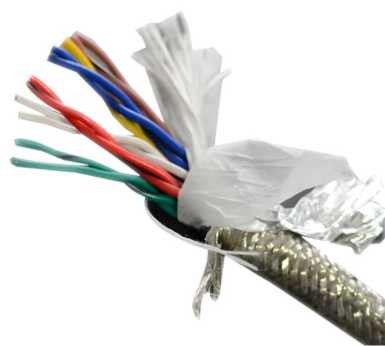
4. Shielding: A dual-layer shielding configuration consisting of individual core screening (to reduce crosstalk) and an overall braid shield (to reject external electromagnetic interference). The overall shielding effectiveness provides attenuation ≥85 dB at relevant frequencies.
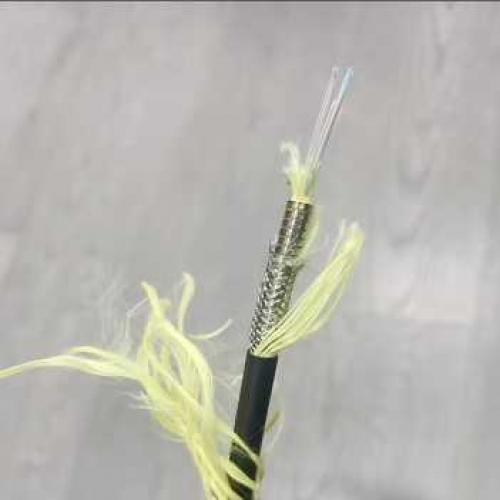
5. Strength Member: An integrated reinforcement layer made of high-tenacity aramid fibers (e.g., Kevlar) or galvanized steel wires. The tensile strength can be engineered from 5 kN up to 50 kN, and the cable is designed to withstand over 5 million bending cycles under specified test conditions.
6. Watertight Outer Sheath: The outer jacket is extruded from seawater-resistant, pressure-resistant specialty polyurethane (PUR) or chloroprene rubber (CR).
It is fully sealed via extrusion, with a water absorption rate ≤0.1% and pressure resistance ≥10 MPa (suitable for 1000 m depth; deeper ratings require thicker or higher-grade jackets).
Additives against microbiological attack and UV degradation are included, with proven resistance in salt spray tests exceeding 2000 hours.
Selection Criteria
Water Depth & Pressure: For deep-water installations (e.g., >1000 m), prioritize a robust pressure-resistant jacket and a high-strength strength member (e.g., galvanized steel).
Signal Transmission Requirements: For high-frequency or sensitive signals, choose insulation with low dielectric loss (such as FEP) and consider enhanced shielding (triple shielding) to minimize attenuation and crosstalk.
Dynamic Mechanical Loading: In applications involving frequent bending, twisting, or tension (e.g., tethered vehicles), select a cable with fatigue-resistant design: fine-stranded conductors, flexible strength member, and a durable, flexible jacket.
Installation Guidelines
Connector Interface: Use only dedicated underwater mateable connectors that match the cable’s diameter and sealing requirements to maintain watertight integrity and shield continuity.
Shield Grounding: Ensure proper grounding of the shielding system—either single-point or multi-point—based on the signal type and system grounding scheme.
Handling & Laying: Avoid sharp bends below the minimum bending radius and do not exceed the rated tensile load during installation to prevent internal damage.